How it works
The testis is explored under an operating microscope and visually more promising tubules are selectively sampled.

Micro-TESE is a microsurgical sperm-retrieval procedure used in selected cases of non-obstructive azoospermia, in which seminiferous tubules more likely to contain focal sperm production are identified under an operating microscope and examined.

The testis is explored under an operating microscope and visually more promising tubules are selectively sampled.
It is considered particularly in selected cases of non-obstructive azoospermia.
Each tissue sample is processed immediately and examined for sperm.
Retrieved sperm may be used for ICSI or cryopreserved when appropriate.
Micro-TESE is a surgical method that uses an operating microscope to search for focal areas of sperm production within the testis.
A systematic search of seminiferous tubules is performed under an operating microscope, while the embryology laboratory examines small tissue samples for sperm.
In non-obstructive azoospermia, sperm production may not be uniform throughout the testis. Micro-TESE aims to identify focal areas of production by selectively examining tubules that appear more promising microscopically.
Compared with conventional TESE, more targeted sampling may reduce unnecessary tissue removal, although the operation is technically more demanding and may take longer.
Karyotype and Y-chromosome microdeletion results are important before surgery. With complete AZFa or AZFb deletions, surgical sperm retrieval is generally not recommended because sperm retrieval is not expected.

Micro-TESE is a more targeted technique designed particularly for selected cases of non-obstructive azoospermia.
Tissue samples are taken from selected areas.
Seminiferous tubules are examined under an operating microscope.
In obstructive azoospermia, sperm production is usually preserved, so simpler sperm-retrieval methods may be sufficient.
The main group considered for Micro-TESE is men with confirmed non-obstructive azoospermia who are planning ICSI.
Absence of sperm in the ejaculate because of severely impaired sperm production.
Selected cases after appropriate hormonal and genetic counselling.
After considering oncology history, treatment exposure and appropriate timing.
Reassessment based on previous surgical and pathology findings.
When no sperm are found in the ejaculate.
When a small number of retrieved sperm may be used through intracytoplasmic sperm injection.
It is generally not recommended with complete AZFa/AZFb deletions or when surgical risk is considered unacceptable.
Genetic, hormonal, surgical and IVF planning should be completed before the procedure.
Repeat semen analyses including pellet examination.
Karyotype and Y-chromosome microdeletion testing.
FSH, LH, testosterone and additional hormone tests when indicated.
Clinical examination and ultrasound in selected cases.
General health, current medication and bleeding risk are reviewed.
Fresh coordinated use or cryopreservation in advance, depending on the treatment plan.
Microsurgery proceeds with real-time feedback from the embryology laboratory.
The planned procedure, relevant genetic findings and backup plan are confirmed.
The procedure is performed under appropriate anaesthesia.
The testis is opened in a controlled microsurgical manner.
Tubules that appear more promising under magnification are selectively sampled.
Each tissue sample is processed promptly and examined for sperm.
Laboratory findings help guide further surgical sampling.
The aim is to minimise unnecessary tissue removal.
Retrieved sperm are used or stored according to the treatment plan.
Procedure duration varies according to testicular tissue and laboratory findings and may be longer than conventional TESE.
Genetic and hormone results are usually completed in advance.
Duration depends on the extent of microscopic exploration required.
Tissue is examined by the laboratory during surgery.
Short post-operative observation may be required.
Pain and swelling can persist for several days.
Testosterone follow-up may be required in selected patients.
A few days may be planned for the procedure and short follow-up. A coordinated IVF programme may require a longer stay.
No single test can predict sperm retrieval with certainty.
Y-chromosome AZF findings provide important prognostic information.
The presence of focal spermatogenesis is a key determinant.
Previous surgery may affect tissue structure and blood supply.
Microscopic selection of tubules is important.
The laboratory must identify very limited numbers of sperm and assess viability when required.
ICSI outcomes after sperm retrieval also depend on oocyte age and quality.
FSH, testicular volume or age alone cannot determine with certainty whether sperm will be found.
Costs vary according to microsurgery, anaesthesia, laboratory sperm search and the coordinated IVF plan.
Operating microscope and microsurgical team.
Type of anaesthesia and hospital/operating-theatre use.
Detailed laboratory examination of testicular tissue.
Cryopreservation of limited retrieved sperm when appropriate.
Oocyte retrieval and intracytoplasmic sperm injection.
Counselling about the implications of genetic findings for the family.
Share your genetic and hormone results so suitability for Micro-TESE and whether fresh use or prior cryopreservation is more appropriate can be reviewed.
A key component of Micro-TESE is immediate laboratory assessment of each tissue sample obtained by the surgeon during the procedure.
Each tissue sample is recorded with its anatomical sampling location.
Tubules are processed using controlled mechanical methods.
Very small numbers of sperm are searched for systematically.
Selected viability-assessment techniques may be used for immotile sperm.
Small numbers of sperm may be stored in very small aliquots to reduce loss during future use.
Retrieved viable sperm are matched with the correct oocyte source through the laboratory identity chain.
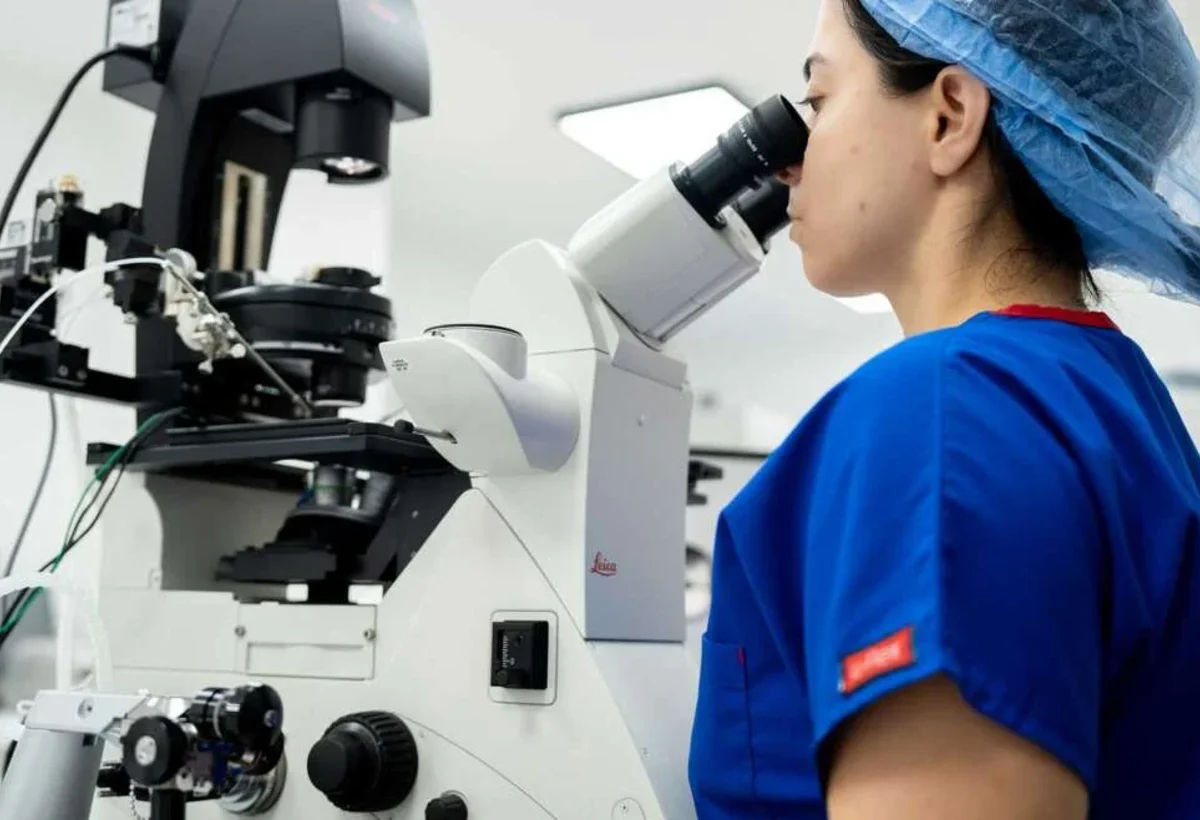
Microsurgery, IVF timing and embryology laboratory work are coordinated within one treatment plan.

Coordinates the female partner’s oocyte retrieval and ICSI schedule with surgical sperm retrieval.
View profile →
Coordinates genetic counselling, treatment decisions and alternative plans.
View profile →
Manages systematic sperm search in tissue samples, viability assessment, ICSI and cryopreservation.
View profile →Micro-TESE should be performed by an appropriately trained urology/andrology specialist with microsurgical experience.
The procedure should be considered together with its potential benefits, surgical risks and the possibility that no sperm will be found.
This is the most important limitation.
Follow-up may be required, particularly in patients with low testosterone before surgery.
These are recognised surgical risks.
Uncommon but possible.
The targeted approach aims to reduce tissue loss but cannot eliminate this risk entirely.
Reassessment may be required after an unsuccessful procedure or when only a very limited number of sperm are found.
Key information about NOA, the chance of retrieving sperm and recovery after the procedure.
It is a microsurgical technique that uses an operating microscope to identify testicular tubules more likely to contain focal sperm production.
It is considered particularly for men with confirmed non-obstructive azoospermia who are planning ICSI.
Sperm may be found in some patients, but retrieval cannot be guaranteed.
Micro-TESE uses an operating microscope for a more targeted and systematic search of testicular tissue.
High FSH alone is not an absolute contraindication; the full clinical and genetic assessment is required.
It may be considered in selected cases after genetic and hormonal counselling.
Yes. Surgery is generally not recommended with complete AZFa/AZFb deletions; sperm may still be retrieved in some cases with AZFc deletions.
It is performed under anaesthesia; tenderness and discomfort may persist for several days afterwards.
Yes, suitable retrieved sperm may be cryopreserved in very small aliquots.
It can be performed in coordination with oocyte retrieval for fresh use, or sperm may be retrieved in advance and cryopreserved.
A temporary or persistent decrease can occur, and follow-up is arranged when indicated.
A few days may be sufficient for the procedure and short follow-up; a coordinated IVF programme may require a longer stay.
Message us on WhatsApp for information about treatments, the process and planning your visit to Cyprus.