
Embryo Freezing and Storage Systems
Embryo freezing is not complete when the vitrification device enters liquid nitrogen. Safe long-term cryopreservation also depends on identity verification, inventory control, cryotank management, monitoring, contingency planning and a validated warming process.
- Identity continuityCryodevices and storage records remain linked to the correct patient.
- Inventory controlTank, canister and storage location are documented for traceability.
- Monitoring and responseCryogenic conditions, alarms and contingency procedures form part of storage safety.
Cryogenic storage is designed for long-term preservation, but no storage system should be described as zero-risk. Safety depends on equipment, monitoring, maintenance, traceability and emergency planning.
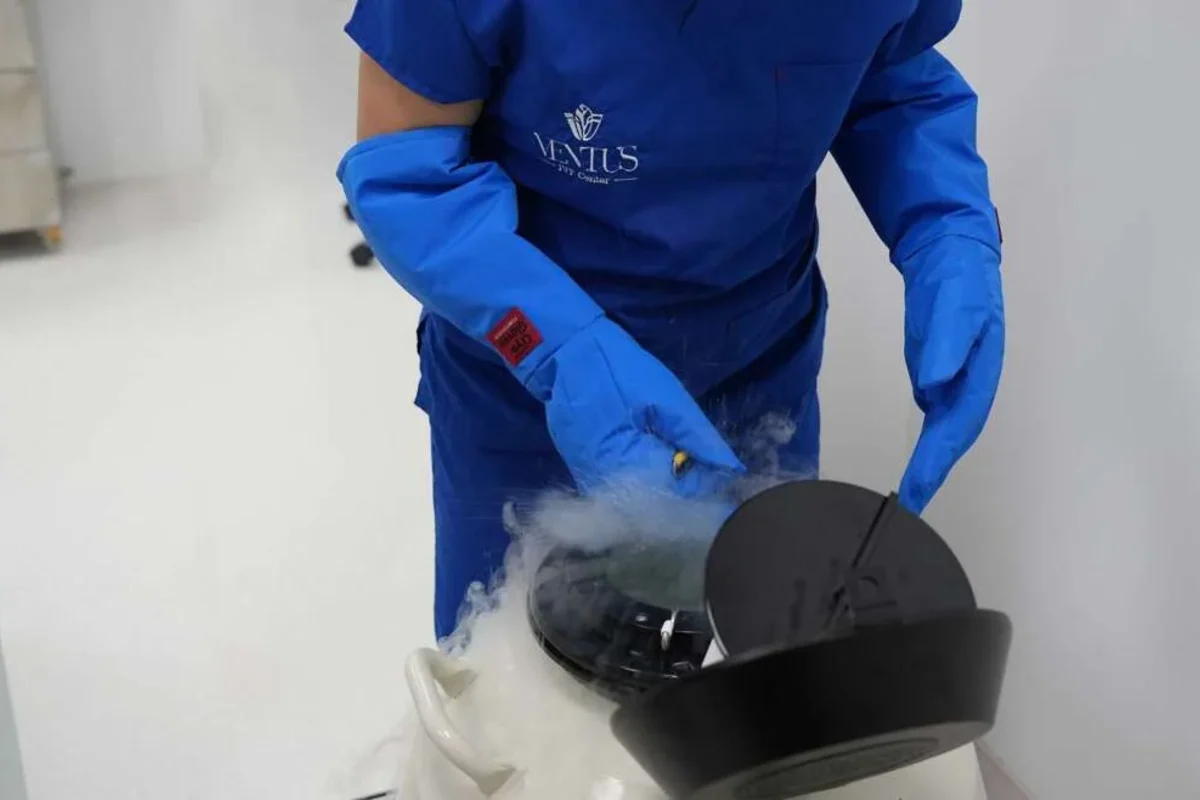 Cryostorage · Traceability and monitoring
Every frozen embryo needs a traceable identity, a known storage location and a monitored cryogenic environment.
Patients often focus on the freezing day, but the years that may follow are equally important. Cryostorage is a continuing laboratory responsibility.
A complete system connects vitrification, labelling, electronic or manual witnessing, inventory, tank management, monitoring, consent records and the later warming plan.
Traceable cryodevices
Each storage device is labelled and linked to the correct patient record.
Structured inventory
Tank and location information allows stored material to be found and verified.
Cryogenic monitoring
Storage conditions and liquid-nitrogen management are checked according to protocol.
Contingency planning
Alarm response, backup capacity and emergency procedures are part of responsible cryostorage.
What does an embryo freezing and storage system include?
The system begins with assessment and vitrification of suitable embryos, then continues with patient-specific labelling, witnessed identity checks, placement in a documented cryostorage location and ongoing inventory management.
Cryotanks, liquid-nitrogen supply, monitoring, alarms, maintenance, access control and emergency procedures all contribute to storage safety. When an embryo is later needed, identity is re-verified before warming and clinical use.
Important distinction: “frozen” does not mean “forgotten”. Cryopreserved embryos remain part of an active laboratory inventory that requires governance, consent management, equipment oversight and planned response to deviations.
The safest system connects the embryo’s identity, location and storage conditions over time.
A tank by itself is not a storage programme. Traceability, inventory reconciliation, alarm management, access control, maintenance and emergency capacity are all needed around the cryogenic equipment.
Vitrification
Suitable embryos are cryopreserved using the validated protocol.
Identification
Cryodevices are labelled and witnessed before storage.
Storage
Tank and exact inventory location are documented.
Monitoring
Cryogenic conditions, records and contingency readiness are maintained.
How are embryos frozen, stored and later warmed?
The sequence is designed to preserve both biological material and identity continuity. Exact devices and inventory methods vary by laboratory.
Embryos are reviewed
Embryos appropriate for cryopreservation are documented before freezing.
Rapid cryopreservation is performed
The validated vitrification protocol is completed for the developmental stage.
Cryodevice is verified
Patient identifiers are checked and linked to the device before storage.
Storage location is recorded
Tank, canister and position are entered into the laboratory inventory.
Cryostorage is maintained
Liquid nitrogen, equipment status and alarms are managed according to the quality plan.
Identity is rechecked
When treatment is planned, the correct embryo is retrieved and warmed using the validated protocol.
Which elements are controlled in a cryostorage system?
Storage safety depends on more than temperature. Identity, inventory, physical access, equipment maintenance and emergency response are equally important.
Policies for consent, storage duration and disposition should also remain current throughout the storage period.
Patient and specimen identity
Records must continuously link the cryodevice to the correct patient.
Cryodevice details
Device type, number and contents are documented.
Tank and location
The precise storage position is recorded and reconciled.
Liquid-nitrogen management
Tank conditions and filling procedures follow a defined protocol.
Alarm and contingency system
Staff need a plan for abnormal conditions, equipment failure or supply interruption.
Consent and storage status
Current consent, authorised use and applicable storage requirements are maintained.
A freezing procedure and a complete cryostorage system
Long-term cryostorage is a recognised laboratory-safety responsibility requiring documented inventory, monitoring, maintenance and contingency planning.
Professional guidance addresses cryotank management, identification, inventory, alarm systems, disaster planning and policies for stored reproductive material. These processes are intended to reduce preventable risk.
Even with robust systems, cryostorage should not be described as risk-free. The appropriate standard is layered safeguards, documented response plans and transparent communication with patients.
A strong cryostorage programme protects traceability and environmental stability over time. It preserves an opportunity for future treatment but cannot guarantee embryo survival after warming or a later pregnancy.
Why do we state the limits clearly?
No storage system is zero-risk. Equipment and human failures remain possible and require contingency planning.
Warming survival is not guaranteed. Biological response varies even after technically appropriate storage.
Consent must stay current. Storage duration and future use depend on consent and applicable requirements.
Inventory integrity matters. Accurate records and periodic reconciliation are fundamental to safe retrieval.
When are embryo freezing and storage systems relevant?
Cryostorage becomes relevant whenever embryos are intentionally preserved for later use. The reason may be clinical, genetic, logistical or part of a personalised transfer strategy.
Surplus suitable embryos
Embryos not transferred in the current cycle may be preserved for future treatment.
Freeze-all strategies
Transfer may be deferred and suitable embryos stored for a later cycle.
PGT cycles
Embryos are commonly stored while genetic results are pending.
Future sibling attempts
Cryopreserved embryos may remain available for later family-building plans.
Donation or coordinated programmes
Where legally and clinically appropriate, storage can support complex treatment logistics.
Long-term fertility planning
Embryos may remain stored for an extended period subject to consent and applicable rules.
What does this technology not do?
Clear limits help prevent unrealistic expectations and keep laboratory information in the correct clinical context.
Storage does not guarantee that every embryo will survive warming.
Cryopreservation does not guarantee implantation, pregnancy or live birth.
A cryotank alone is not a complete safety system; inventory, monitoring and contingency planning are required.
Storage duration and future use are subject to consent and applicable clinical or legal requirements.
Identity and location records must remain accurate throughout the storage period.
At Ventus IVF, cryopreservation is managed from vitrification to retrieval as one traceable pathway.
We connect cryodevice labelling, witnessing, storage location, inventory records and later warming within the laboratory quality system.
We explain both the purpose and the limits of storage so patients understand that preservation protects future treatment options rather than guaranteeing an outcome.
Ask about your situationCommon questions about Embryo Freezing and Storage Systems
These answers provide general laboratory information and do not replace personalised medical advice.
Ask about your situationHow are frozen embryos identified?
Cryodevices are labelled with patient-linked identifiers and verified according to the laboratory’s witnessing and traceability procedures.
Where are embryos stored?
They are kept in designated cryogenic storage tanks, with the exact tank and inventory location recorded in the laboratory system.
Are storage tanks monitored?
Responsible cryostorage programmes use scheduled checks and, where configured, alarms and response procedures for abnormal conditions.
Can embryos remain frozen for years?
Cryogenic storage can preserve embryos for long periods, but permitted duration and continued storage depend on consent and applicable requirements.
Can an embryo be damaged while frozen?
Cryogenic conditions greatly reduce biological activity, but storage and warming are not risk-free. Equipment, handling and biological response all matter.
What happens when I want to use a frozen embryo?
The treatment plan is confirmed, identity and inventory records are checked, the correct cryodevice is retrieved and the embryo is warmed using the validated protocol.
Explore related technologies
Different laboratory technologies support different parts of assessment, safety, culture and cryopreservation.
Scientific sources and further reading
- ASRM committee opinion on cryostorage of reproductive tissues in the IVF laboratory. Source ↗
- Published review of cryostorage practice and risk management. Source ↗
- ASRM guidance for human embryology and andrology laboratory management and operations. Source ↗
- ASRM review of best practices for rapid-cooling vitrification of oocytes and embryos. Source ↗
Ask how embryo identity, storage and warming are managed over time.
Our team can explain the cryopreservation pathway, storage records, monitoring approach and the steps involved when a future frozen-embryo transfer is planned.