Procedure
Washed and concentrated motile sperm are placed into the uterus through a thin catheter close to ovulation.

A less invasive assisted reproduction treatment in which laboratory-prepared motile sperm are placed directly into the uterus through a thin catheter close to ovulation. The decision to use IUI is based on a combined assessment of tubal status, female age, ovulation pattern, semen analysis and duration of infertility.
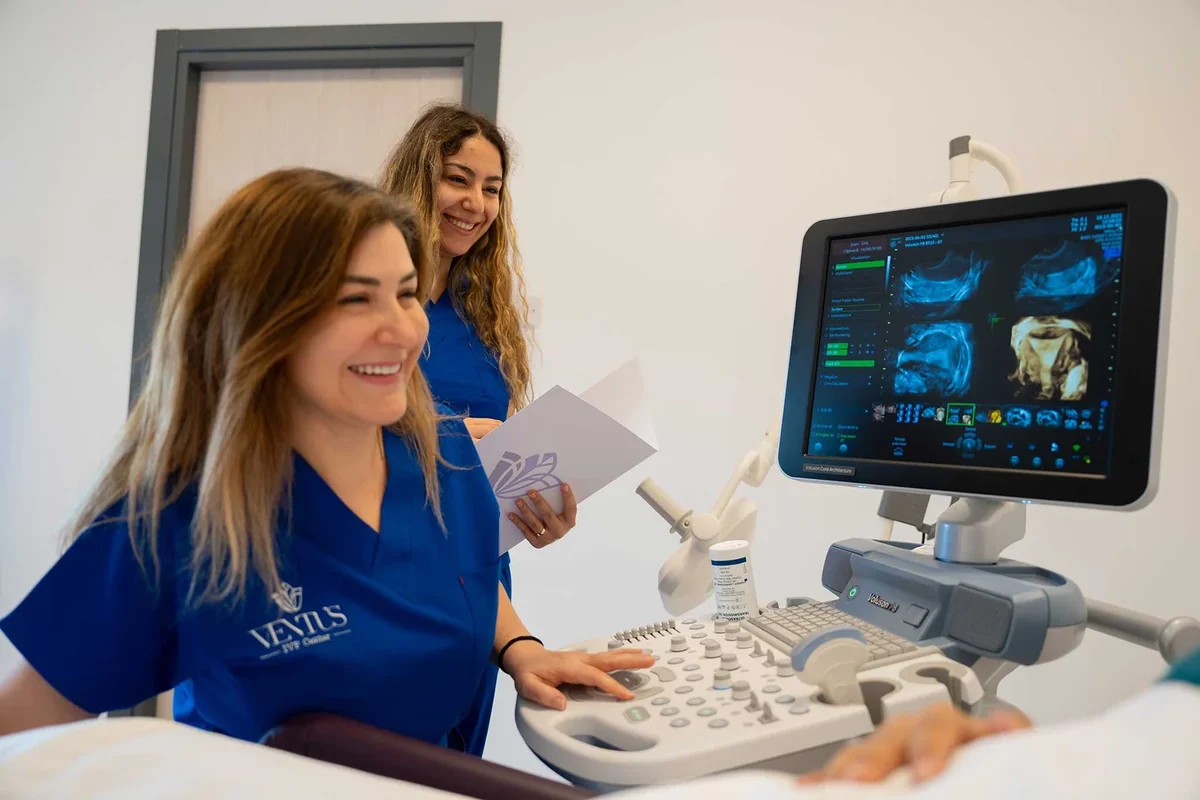
Washed and concentrated motile sperm are placed into the uterus through a thin catheter close to ovulation.
It may be considered in selected patients with unexplained infertility, mild male-factor infertility, ovulatory dysfunction or difficulty with sperm delivery.
Follicular development is monitored by ultrasound; the sperm sample is prepared by the andrology/embryology laboratory on the day of the procedure.
Normal daily activities can usually be resumed after the procedure; a blood pregnancy test is performed on the date specified by the clinic.
IUI stands for “intrauterine insemination”.
In IUI, the semen sample is prepared in the laboratory and motile, suitable sperm are concentrated into a small volume. The prepared sample is placed into the uterine cavity through a soft catheter passed through the cervix close to ovulation.
The aim of IUI is to shorten the distance sperm must travel through the vagina and cervix and to increase the number of motile sperm reaching the fallopian tubes around ovulation. After sperm are placed in the uterus, they travel into the tube under their own motility; the meeting of sperm and oocyte and fertilisation occur inside the body.
Treatment may be carried out in a natural menstrual cycle, or medication may be used to regulate ovulation and support the development of a limited number of follicles. Ultrasound monitoring is important in medicated cycles because too many mature follicles can increase the risk of multiple pregnancy and may require cancellation for safety.
IUI is less invasive than IVF and does not involve oocyte collection or embryo transfer. However, it is not suitable for every patient and the chance of success per cycle is generally lower than with IVF. Age, tubal status, semen results, the cause of infertility and the risk of losing time should therefore be considered together.

Both treatments aim to support the chance of pregnancy, but they differ in where fertilisation occurs, the intensity of treatment and the infertility factors they can address.
Prepared sperm are placed into the uterus. Oocytes are not collected; sperm and oocyte are expected to meet in the fallopian tube.
Oocytes are collected, fertilised with sperm in the laboratory, and a suitable developing embryo is transferred into the uterus.
There is no single rule that “IUI must always be tried first” or that “IVF is always better”. Female age, duration of infertility, ovarian reserve, tubal status, semen results, endometriosis and previous treatments are assessed together to balance time and the probability of success.
IUI is mainly considered in selected patient groups where sperm and oocyte can meet in the fallopian tube and there is no clear factor requiring immediate progression to a more advanced treatment.
For couples in whom no clear cause is identified on initial assessment, natural-cycle or stimulated IUI may be considered after taking age, duration of infertility and previous expectant management into account.
It may be considered when there is a mild reduction in sperm concentration or motility but an adequate number of motile sperm can be obtained after laboratory preparation.
If ovulation can be achieved with treatment, appropriately timed IUI may accompany ovulation induction in suitable patients.
When cervical narrowing, scarring or other factors make sperm passage difficult, placing prepared sperm beyond the cervix into the uterus may be helpful.
IUI may be planned when sperm can be obtained but physical, neurological or psychosexual factors make vaginal intercourse or deposition of sperm in the vagina difficult.
IUI may be used in some treatment plans involving donor sperm. In addition to medical suitability, current legal requirements and the clinic’s approval process must be confirmed.
No. At least one fallopian tube is expected to be patent, ovulation must be possible, and an adequate number of motile sperm should be available after laboratory preparation. Age and the time factor are also important.
IVF/ICSI may be more appropriate when both tubes are blocked, there is significant tubal damage, severe male-factor infertility, moderate-to-severe endometriosis, a very low expected chance of pregnancy, or when avoiding delay is clinically important.
Although IUI itself is a short procedure, appropriate patient selection requires a detailed assessment. Female and male factors are considered together; the decision is not based on ultrasound or a single semen analysis alone.
Duration of infertility, menstrual pattern, pregnancy and miscarriage history, previous operations, infections, current medication and previous fertility treatments are reviewed.
The uterus, endometrium and ovaries are assessed, including any cysts, fibroids or findings that may affect treatment timing.
Menstrual regularity, evidence of ovulation and hormone tests when required are reviewed to decide whether a natural or medicated cycle is appropriate.
Depending on the history and clinical need, HSG, HyCoSy or previous surgical assessment may be used to confirm that at least one fallopian tube is patent.
Sperm concentration, motility and morphology are assessed. If previous results are old or variable, repeat testing may be requested.
Required blood tests, infectious-disease screening and preconception health assessment are completed according to individual circumstances.
Medication, monitoring days, the ovulation-trigger injection and a safe follicle number are discussed in advance; the cycle may be cancelled in the event of an excessive response.
For patients travelling from Turkey, the United Kingdom or elsewhere in Europe, the location of follicle monitoring, the day of travel to Cyprus and the timing of the sperm sample are coordinated.
The IUI procedure itself is brief, but accurate ovulation timing, safe follicular monitoring and sperm preparation are central to the treatment.
Tubal status, ovulation, semen analysis, female age and duration of infertility are assessed to determine the appropriate treatment step between IUI and IVF.
A natural cycle may be monitored in some patients who ovulate regularly. When needed, controlled follicular development may be supported with oral or injectable medication.
Ultrasound monitoring assesses the number and size of follicles and the endometrium. Hormone tests may be added when clinically required.
A natural LH surge may be monitored or an ovulation-trigger injection may be given at the appropriate time. The IUI procedure is timed close to ovulation according to the protocol used.
Partner sperm is provided under appropriate conditions on the day of the procedure; when frozen or donor sperm is used, the thawing and identity-verification plan is followed.
The sample is washed, separated from seminal fluid and motile sperm are concentrated into a small volume. The preparation method is selected according to the characteristics of the sample.
The cervix is visualised with a speculum, a thin soft catheter is advanced into the uterine cavity, and the prepared sperm sample is slowly deposited.
After a brief rest, the patient can usually return to normal daily activities. Progesterone support may be used when indicated, and a beta-hCG test is performed on the specified date.
After sperm preparation is completed in the clinical laboratory, the patient is positioned for a gynaecological examination. Following placement of the prepared sample into the uterus through a thin catheter, anaesthesia or prolonged observation is generally not required.
Short-lived cramping or spotting can occur. Prolonged bed rest, raising the legs or taking time off work is not necessary for most patients; individual advice is provided by the doctor.
Medications are continued as prescribed. The presence or absence of symptoms does not reliably indicate pregnancy. A beta-hCG test on the scheduled date is preferred to early home testing.
The IUI procedure itself may be completed within a few minutes. The overall process, from the start of the menstrual cycle and follicle monitoring to insemination and the pregnancy test, generally spans approximately one cycle.
Review of investigations, suitability assessment and cycle planning.
VariableBaseline ultrasound and medication start when required.
Days 1–3Ultrasound monitoring in a natural or medicated cycle.
Approximately 7–12 daysSperm preparation and intrauterine insemination.
Same dayContinue medication and normal daily activities.
Approximately 2 weeksBeta-hCG measurement on the date specified by the clinic.
Scheduled dayIf initial investigations and early follicle monitoring can be completed in your country of residence, travel to Cyprus may be planned around the final monitoring visit, sperm preparation and the IUI day. Because response to medication can vary, flexibility in flight and accommodation arrangements is recommended.
Explore international patient coordinationThe outcome of IUI does not depend only on placing sperm into the uterus. Oocyte quality, tubal function, the prepared sperm sample and accurate timing all contribute.
Age is one of the most important factors affecting oocyte quality and the chance of pregnancy; the number of attempts and how long to continue are planned accordingly.
Expected outcomes differ between diagnoses such as unexplained infertility, mild male-factor infertility and ovulatory dysfunction.
The surrounding anatomy and function of a tube that appears patent are also important. Significant tubal damage can limit the effectiveness of IUI.
The total number of motile sperm obtained after preparation may be a more direct treatment indicator than the initial semen analysis.
An appropriate number of mature follicles may support the chance of pregnancy, while too many follicles are not safe because of the increased risk of multiple pregnancy.
Timing insemination in relation to the LH surge or ovulation-trigger injection affects the opportunity for sperm and oocyte to meet.
Endometrial polyps, submucosal fibroids or other endometrial factors can affect the chance of pregnancy and may require treatment first.
The choice between a natural cycle, oral medication or gonadotrophins is based on potential benefit, multiple-pregnancy risk, cost and previous response.
Release of the oocyte from the monitored follicle.
Sperm and oocyte meet in the fallopian tube.
Identification of an intrauterine gestational sac on ultrasound.
A pregnancy resulting in the birth of a live baby.
A positive pregnancy test, clinical pregnancy and live birth are not the same outcome. When comparing success data, it is important to know the age group, type of sperm used, medication protocol and whether rates are calculated per cycle or per patient.
The cost of IUI is not limited to the catheter procedure itself. Initial assessment, number of monitoring visits, medication, sperm-preparation method and additional investigations can all affect the total scope.
No embryo is created in the laboratory during IUI. The laboratory’s main role is to assess the sperm sample within a secure identity chain, prepare it using an appropriate method and produce a motile sperm fraction for placement into the uterus.

On the day of the procedure, the semen sample is accepted following identity verification. After liquefaction and basic microscopic assessment, a preparation method appropriate to the sample is selected. The aim is to reduce seminal plasma and concentrate progressively motile sperm into a small volume.
Sample acceptance, staff competency, equipment monitoring, quality control, documentation and traceability processes are standardised. The Ventus IVF Center Laboratory CAP certificate carries number CAP# 9751707.
Provides an additional safety layer for patient identity verification during acceptance, preparation and release of the semen sample for insemination; it does not replace human checks.
Density-gradient preparation, swim-up or other appropriate laboratory methods may be selected according to sample characteristics. The aim is not to use the same technique for every patient, but to safely prepare a usable motile sperm fraction.
Microfluidic systems may be considered for selected samples when clinically appropriate. They are not a mandatory part of routine IUI and should not be assumed to provide additional benefit for every patient.
Variables such as microscope performance, centrifugation, pipettes, temperature and timing are documented; maintenance and performance checks are carried out according to the laboratory quality plan.
Because IUI does not involve oocyte collection or laboratory embryo culture, EmbryoScope+, embryo grading and embryo selection are not part of the treatment.
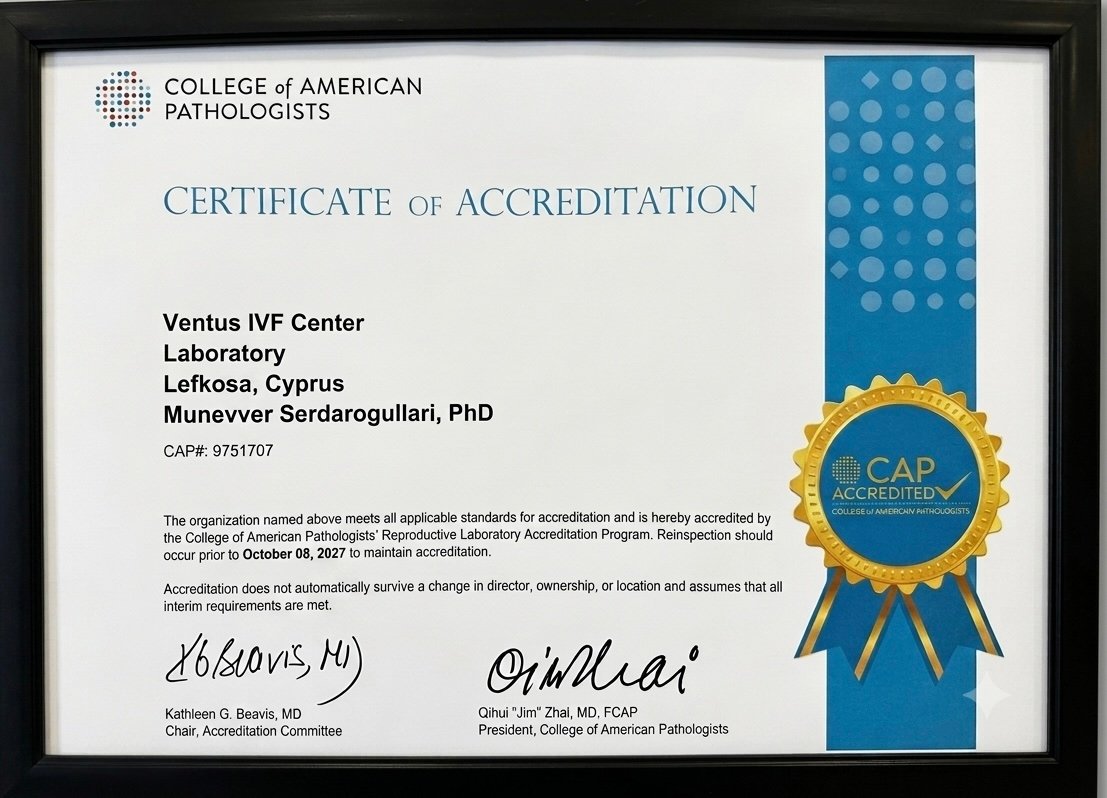
The certificate states that the laboratory is accredited under the CAP Reproductive Laboratory Accreditation Program and indicates that reinspection is due before 8 October 2027.
IUI requires coordinated work between the clinic and laboratory for suitability assessment, follicle monitoring, ovulation timing and sperm preparation.

Treatment suitability, personalised protocol, clinical monitoring and embryo transfer planning.
View profile
Scientific processes, laboratory standards and quality approach
View profile
Fertilisation, embryo culture, development assessment, laboratory safety and traceability processes.
View profileIUI is a less invasive fertility treatment, but medication use, patient selection and biological uncertainty mean that it is not risk-free and cannot guarantee an outcome.
The risk of twins or higher-order multiple pregnancy can increase when ovarian-stimulation medication results in the development of more than one follicle.
In medicated cycles, a large number of follicles or, rarely, signs of ovarian hyperstimulation may develop; close monitoring is required.
The cycle may be cancelled for safety or effectiveness because of too many follicles, inadequate response, premature ovulation, unsuitable endometrium or an issue with the sperm sample.
Mild cramping or spotting can occur after catheter placement. The risk of infection is low but not zero.
If pregnancy occurs, ectopic pregnancy should be considered particularly in patients with a history of tubal disease; early ultrasound follow-up is important.
IUI does not open blocked tubes, correct severe sperm-production disorders or change oocyte quality.
In advanced age, low ovarian reserve or long-standing infertility, repeated IUI attempts can delay progression to a more effective treatment.
Even with accurate timing and appropriate sperm preparation, fertilisation, implantation, clinical pregnancy or live birth cannot be guaranteed.
We answer common questions ranging from suitability and the procedure day to pregnancy testing and planning a stay in Cyprus.
IUI is a procedure in which a semen sample is washed and concentrated for motile sperm in the laboratory and then placed into the uterus through a thin catheter close to ovulation. Fertilisation occurs in the fallopian tube, not outside the body.
In IUI, oocytes are not collected and embryos are not created in the laboratory; prepared sperm are placed in the uterus and fertilisation is expected to occur in the fallopian tube. In IVF, oocytes are collected, fertilisation and embryo development are monitored in the laboratory, and an embryo is then transferred into the uterus.
It may be considered in selected patients with at least one patent tube, achievable ovulation and an adequate number of motile sperm after preparation. Examples include unexplained infertility, mild male-factor infertility, ovulatory dysfunction, cervical factor or difficulties with sperm delivery.
Usually, yes. Because sperm and oocyte meet in the fallopian tube, at least one tube is expected to be functionally patent. The doctor decides whether tubal assessment is needed according to medical history, ultrasound and previous investigations.
There is no single universal threshold. Total motile sperm count, motile cells obtained after washing, morphology, female age and the cause of infertility are considered together. IVF or ICSI may be more appropriate in significant male-factor infertility.
The procedure is brief for most patients and does not require anaesthesia. Mild pressure or short-lived cramping related to the speculum and catheter may be felt; severe pain is not expected.
Routine IUI is generally performed without anaesthesia. If there is a particular difficulty in passing through the cervix or another clinical issue, the approach is individualised.
The procedure itself usually takes only a few minutes. The overall schedule of follicle monitoring, medication and pregnancy testing is generally completed within one menstrual cycle; duration can vary between natural and stimulated cycles.
In a natural cycle, the patient’s own ovulation is monitored. In a medicated cycle, medication may be used to support development of one or a limited number of follicles. Because stimulation can increase the risk of multiple pregnancy and excessive response, close ultrasound monitoring is required.
Sperm preparation aims to concentrate motile sperm and reduce seminal fluid and unsuitable cellular debris. Unprocessed semen is not placed directly into the uterus because seminal fluid can cause significant cramping and unwanted reactions.
A short rest may be offered at the clinic, but prolonged bed rest has not been shown to increase the chance of pregnancy. Normal daily activities can usually be resumed shortly afterwards unless the doctor advises otherwise.
For most patients, intercourse is not prohibited unless the doctor identifies a reason to avoid it. Individual advice may be given when the ovaries have responded strongly to medication or when there is pain or bleeding.
Mild pelvic cramping, very light spotting or medication-related bloating can occur. Contact the clinic if severe pain, heavy bleeding, fever, shortness of breath or rapidly increasing abdominal swelling develops.
The clinic provides the test date according to ovulation timing and medication used; in many protocols, a blood beta-hCG test is performed approximately two weeks after insemination. Testing too soon after a trigger injection can be misleading.
The increased risk is related mainly to ovarian-stimulation medication causing development of multiple follicles rather than to the IUI procedure itself. If the follicle number exceeds a safe threshold, the cycle may be cancelled or intercourse may be discouraged.
There is no fixed number suitable for everyone. Age, duration of infertility, diagnosis, semen results, response in previous cycles and the risk of losing time are considered. Current guidance may support discussing a move to IVF after several IUI cycles in selected groups.
If some investigations and follicle monitoring can be completed where you live, the stay in Cyprus may be shorter. Final ultrasound, sperm preparation and insemination are planned according to your individual schedule; the exact duration is provided after your records are reviewed.
The scope may include medical assessment, ultrasound and hormone monitoring, medication, trigger injection, sperm preparation, the IUI procedure, luteal support and pregnancy testing. Donor sperm, tubal-patency testing or additional investigations may be separate items.
IUI suitability, female and male assessment and alternative treatment steps are considered together.
Send your ultrasound, hormone, tubal-patency and semen-analysis results. We can assess whether IUI is the appropriate first step, discuss natural versus medicated-cycle planning and coordinate your travel schedule to Cyprus.
This content was prepared with reference to the NICE 2026 fertility guidance, ASRM patient information and HFEA IUI guidance to support current IUI information.
Message us on WhatsApp for information about treatments, the process and planning your visit to Cyprus.