Procedure
The patient and selected donor are prepared using separate protocols; oocytes are collected, fertilised and monitored separately.

Tandem IVF is a combined treatment approach in which IVF using the patient’s own oocytes is carried out while a suitable egg donor is prepared in parallel. The aim is to preserve the opportunity to try with the patient’s own oocytes while keeping donor oocytes available within the same plan if ovarian response is low or embryo development is insufficient.

The patient and selected donor are prepared using separate protocols; oocytes are collected, fertilised and monitored separately.
It may be considered for patients with very low ovarian reserve or advanced reproductive age who wish to retain an attempt with their own oocytes while keeping donor oocytes as a backup option.
Embryos created from the patient’s own oocytes and donor oocytes remain in separate identity, culture and reporting pathways.
According to embryo development, consent and the clinical decision, one group is selected for transfer; suitable embryos from the other group may be frozen.
A tandem cycle is a treatment plan in which an IVF attempt using the patient’s own oocytes and an egg-donation programme are carried out in parallel or in close succession within the same treatment schedule.
The patient and donor undergo separate ovarian stimulation; their oocytes are collected separately and fertilised within separate identity pathways. This allows embryo development from the patient’s own oocytes to be observed while a separate backup group of embryos may also be created from donor oocytes.
Tandem treatment may be considered particularly for patients who wish to make a further attempt with their own oocytes but also want to reduce the possibility of treatment ending without an embryo because of low ovarian reserve or previous poor embryo development. Preparing the donor option within the same schedule may reduce the need to start a separate donation cycle later.
This approach does not mean ‘mixing’ the patient’s oocytes with donor oocytes. Each oocyte source is labelled, fertilised, cultured and reported separately. Embryos created from the patient’s own oocytes and from donor oocytes have different genetic relationships; consent, counselling and transfer decisions should therefore be discussed in detail before treatment starts.
The term ‘tandem cycle’ is not standardised in exactly the same way in every international guideline. Clinics may use different programmes, including simultaneous stimulation, use of prepared donor oocytes, or freezing embryos for staged transfer. The actual plan proposed at Ventus IVF should be individualised according to medical suitability and applicable regulations.
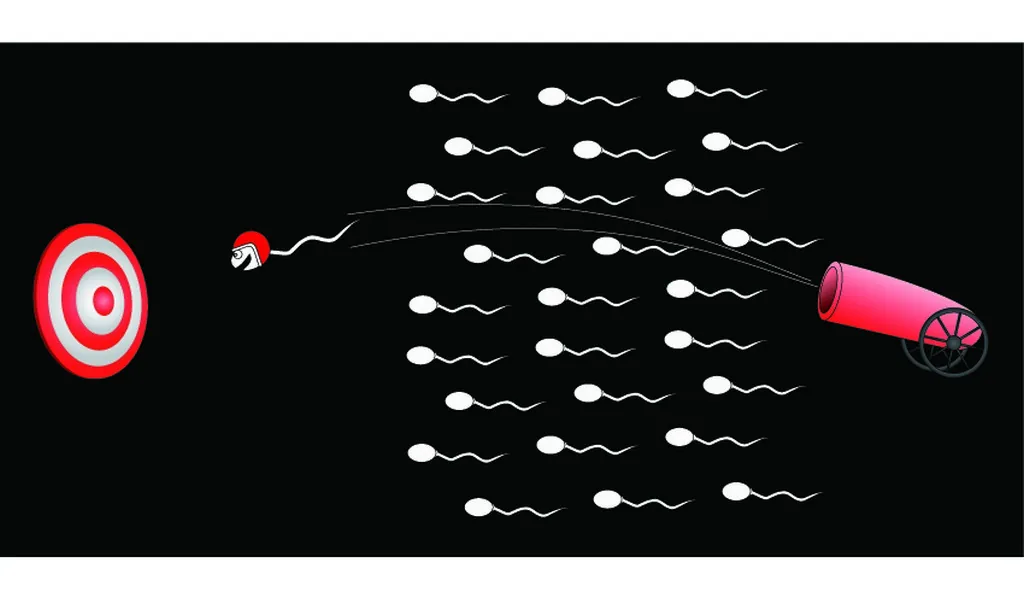
Donor oocytes may be used in both programmes; the main difference is whether treatment using the patient’s own oocytes continues within the same overall plan.
While the patient undergoes endometrial preparation, suitable donor oocytes are fertilised with sperm.
The patient also undergoes ovarian stimulation and oocyte collection, while the donor programme is prepared separately.
No. With very low ovarian reserve, the possibility of obtaining no oocytes from the patient, together with treatment burden, cost and emotional expectations, should be considered. For some patients, direct egg donation or a separate IVF attempt using their own oocytes may be more appropriate.
Suitability is not determined by AMH alone. Age, antral follicle count, previous oocyte-collection results, embryo development, pregnancy goals and the patient’s personal decision regarding donor-oocyte use are considered together.
It may be considered when only a small number of follicles are expected and there is a high risk that a cycle using the patient’s own oocytes may be cancelled.
It may be considered for patients with age-related reduction in oocyte number and quality who still wish to attempt treatment using their own oocytes.
It may be considered after previous stimulation cycles produced only a small number of oocytes or were cancelled before oocyte collection.
It may be discussed as an option for patients with repeated low fertilisation or limited blastocyst development using their own oocytes.
It may be planned for patients who wish to reduce the time required to start a separate donation cycle if treatment with their own oocytes does not produce a suitable embryo.
It may be considered when the patient understands the genetic, consent, psychological and legal implications and makes an informed decision to accept the use of donor oocytes.
No. Age, follicle number, previous response, pregnancy safety and the individual’s views on donor oocytes vary. In some patients, IVF using their own oocytes, a natural or modified cycle, or direct egg donation may be more appropriate.
If there are no follicles that can respond to stimulation, the part of the programme using the patient’s own oocytes may not be possible. If the uterus and general health are suitable, an egg-donation programme may be considered separately.
Embryo development from the patient’s own oocytes and donor oocytes is reported separately. The transfer decision is based on preferences discussed before treatment together with the actual embryo-development information available on the day of treatment.
If this is the patient’s priority, transfer or freezing of a suitable embryo created from her own oocytes may be considered.
If prior consent has been given and a suitable embryo from donor oocytes is available, transfer from the donor group may be planned.
Options such as transferring one embryo group and freezing the other are decided according to embryo number and quality, patient preference and applicable regulations.
Such an approach can create substantial uncertainty regarding genetic parentage, embryo identity and the origin of a future child. Its applicability, ethical implications and local legal framework must be assessed explicitly by the clinic and it should not be presented as a routine option.
The patient, partner or sperm source, donor, uterus and laboratory plan are assessed through separate but connected checklists.
AMH, antral follicle count, age, previous medication doses, number of oocytes collected and previous embryo outcomes are reviewed.
The uterus, chronic conditions, medication, pregnancy-related risks and required infection screening are assessed.
Semen analysis, previous fertilisation results, carrier status and family history are considered alongside donor matching.
Medical, infectious-disease, genetic and psychosocial assessments are completed according to applicable requirements.
The preferred embryo group, storage of remaining embryos and possible scenarios are discussed in advance.
The patient’s and donor’s cycles, oocyte-collection dates and endometrial preparation are coordinated.
The use of donor gametes, genetic relationships, future disclosure to the child and family dynamics may be discussed.
A flexible schedule is prepared for travel to Cyprus, sperm provision, oocyte collection, embryo monitoring and transfer dates.
Two separate ovarian-stimulation and laboratory pathways are coordinated within one patient treatment roadmap.
The medical, genetic, psychological and legal aspects of the tandem programme are explained.
Health, infection and genetic assessments for the suitable donor candidate are verified.
The patient’s and donor’s menstrual schedules and medication start dates are planned.
The patient and donor are monitored separately with individual doses and appointments; their ovarian responses are independent.
Separate procedure, documentation and safety steps are used for each oocyte source.
Oocytes are fertilised with sperm; embryos from the patient and donor are monitored in separate dishes and reports.
Fertilisation, day-3 and blastocyst outcomes are reviewed when deciding which embryo group to use for transfer.
The selected embryo is transferred; other suitable embryos may be stored according to consent and applicable regulations.
Because the patient may undergo both ovarian stimulation/oocyte collection and embryo transfer, symptoms and medication requirements vary according to the stage of treatment.
Mild pain and spotting can occur. The clinic should be contacted if abdominal swelling increases, breathing becomes difficult, heavy bleeding occurs or fever develops.
Development reports for embryos from the patient’s own oocytes and donor oocytes should be discussed separately, and the source of the embryo selected for transfer should be confirmed clearly.
Progesterone and other medications are continued at the prescribed times; safe normal activity is generally advised rather than prolonged bed rest.
After donor matching and preliminary preparation have been completed, active ovarian stimulation usually lasts around two weeks; embryo culture and the transfer plan can change the total duration.
Investigations, counselling and consent.
VariableScreening and programme coordination.
Individual durationSeparate monitoring for the patient and donor.
Approximately 8–12 daysTwo separate procedures and sperm preparation.
Scheduled dayFertilisation and blastocyst monitoring.
3–6 daysFresh transfer or later FET and beta-hCG testing.
Personalised scheduleSome ultrasound and blood-test monitoring may be completed where the patient lives. However, oocyte collection, sperm provision, donor coordination, embryo development and the possibility of fresh transfer can affect the dates. Flights and accommodation should be planned flexibly and confirmed with the clinic.
Explore international patient coordinationA single success rate for tandem treatment can be misleading because embryos derived from the patient’s own oocytes and donor oocytes have different biological determinants.
These play an important role in the number and chromosomal potential of embryos that may be obtained from the patient’s own oocytes.
Fertilisation, blastocyst development and previous transfer outcomes help shape individual expectations.
Age, health, ovarian response and screening results affect the donor-oocyte group.
Fertilisation and embryo development in both oocyte groups can be affected by sperm factors.
Embryos derived from the patient’s own and donor oocytes are assessed separately for fertilisation and blastocyst development.
Regardless of embryo source, the uterine cavity and transfer timing remain important.
Traceability, culture conditions and quality control are especially important when managing two separate embryo groups.
Multiple-pregnancy risk and a single-embryo strategy are considered together with the aim of live birth.
Recorded separately for the patient and donor.
Monitored separately in the two embryo groups.
Recorded according to the embryo group transferred.
The final clinical outcome of treatment.
Because a tandem cycle can involve two separate ovarian-stimulation pathways, a donor programme and extensive laboratory coordination, its cost structure may differ from standard IVF or egg donation alone.
In a tandem programme, laboratory safety centres on keeping the patient’s own oocytes and donor oocytes separate and traceable at every stage.

Each oocyte source is tracked with separate dishes, labels, electronic records and embryo reports. Fertilisation and blastocyst development are reported to the patient as two separate groups, and the source of the embryo loaded into the transfer catheter is confirmed at the final verification step.
Provides an additional verification layer intended to reduce matching errors when two oocyte sources are being managed.
When clinically appropriate, ICSI is performed separately for each oocyte group and outcomes are reported according to the oocyte source.
May support separate time-lapse monitoring of each embryo group.
Imaging and developmental data may provide additional information for embryo ranking; they do not determine embryo origin or pregnancy outcome and do not replace expert judgement.
Supports standardisation of specimen safety, documentation, staff competency, equipment and quality-control processes. Ventus IVF Center Laboratory carries CAP number 9751707.
During extended embryo culture, control of temperature, pH, gases, particles and volatile organic compounds supports a stable environment.
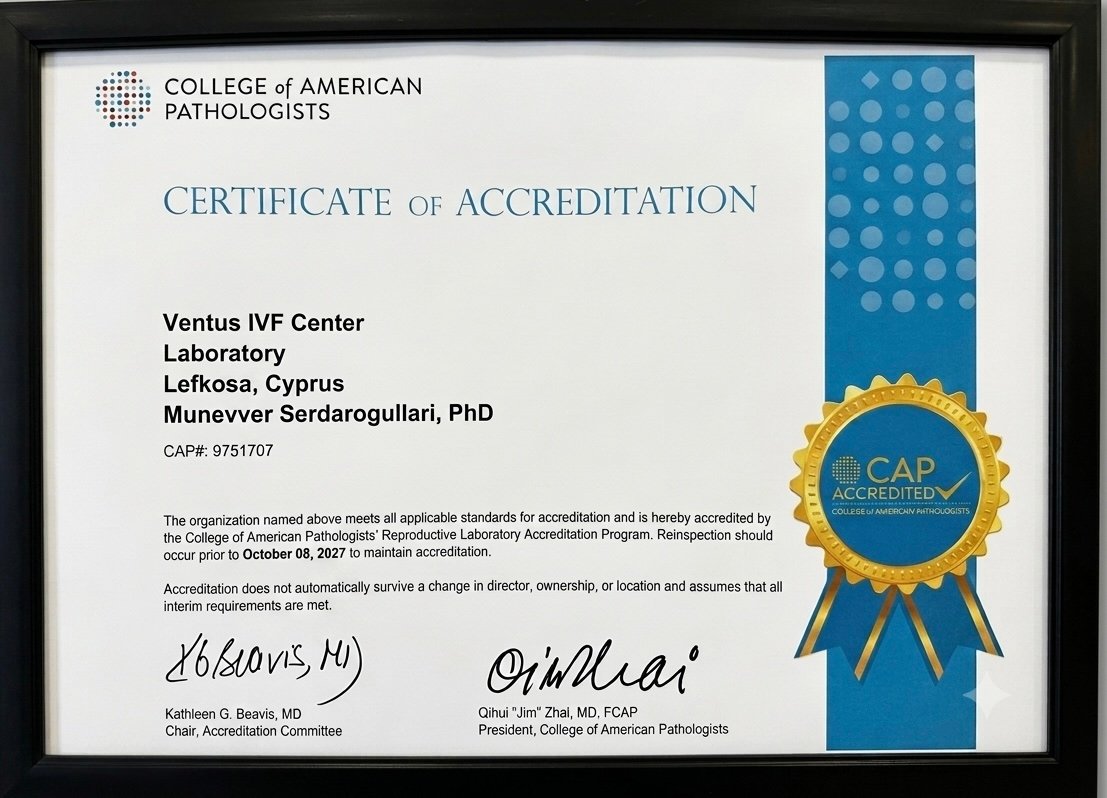
Accreditation reflects the laboratory quality system; it does not guarantee embryo development, pregnancy or live birth from either donor or patient oocytes.
A tandem cycle requires coordinated work between the physician managing the patient’s treatment, donor coordination and screening, scientific quality management and the embryology laboratory safely handling two separate embryo groups.

Treatment suitability, personalised protocol, clinical monitoring and embryo transfer planning.
View profile
Scientific processes, laboratory standards and quality approach
View profile
Fertilisation, embryo culture, development assessment, laboratory safety and traceability processes.
View profileA tandem programme may increase the number of treatment options available within the same schedule, but it also involves more procedures, more complex decisions and risks from two separate treatment pathways.
Despite ovarian stimulation, no oocytes may be obtained from the patient or no mature oocytes may be collected.
The patient has IVF-related risks including pain, bleeding, infection and, rarely, ovarian hyperstimulation.
Fertilisation or blastocyst development is not guaranteed in either the patient or donor-oocyte group.
Managing two separate embryo groups requires clear written consent and robust traceability.
Genetic relationships, donor use and decisions about the future of remaining embryos can be challenging.
Rules concerning donor information, anonymity, consent, storage and the status of the child may vary according to the relevant jurisdiction.
Transferring more than one embryo increases risks for the pregnant patient and babies; a single-embryo approach is considered in suitable patients.
Using two oocyte sources does not guarantee implantation, healthy pregnancy or live birth.
Explore common questions about parallel treatment using the patient’s own and donor oocytes, embryo selection, donor screening, duration, risks and treatment costs.
Tandem IVF, or a tandem cycle, is a combined treatment approach in which IVF using the patient’s own oocytes is planned alongside a separate donation cycle with a suitable egg donor during the same general treatment period.
No. Oocytes obtained from the patient and donor are handled through separate identity and culture pathways. Embryos from each source are documented separately, and the transfer decision is made according to consent and the clinical plan.
It may be considered in patients with very low ovarian reserve, advanced reproductive age, repeated low oocyte yield or poor embryo development who wish to make another attempt using their own oocytes while considering donor oocytes as a backup option.
A tandem cycle is not a separately standardised guideline term with an identical definition and protocol in every country. It is a clinical programme name describing IVF using the patient’s own oocytes and egg-donation treatment planned simultaneously or close together.
Usually, the ovaries of the patient and donor are stimulated separately and each undergoes a separate oocyte-collection procedure. Procedures may occur on the same day or on nearby dates according to the clinical plan.
Donor selection should follow applicable regulations, health screening, infection and genetic assessment, medical suitability and the permitted matching information.
Embryo development from the patient’s own and donor oocytes is assessed separately. Which embryo group is transferred and when is determined according to patient priorities, consent, embryo development, the medical plan and applicable legal requirements.
According to prior consent and the clinical plan, suitable embryos created from donor oocytes may be frozen and stored for future use or managed according to another legally permitted option. This should be clarified in writing before treatment begins.
No. Having the possibility of creating embryos from two separate oocyte sources may reduce the risk that treatment ends without an embryo, but it does not guarantee fertilisation, blastocyst development, implantation, pregnancy or live birth.
In egg donation, embryos are created using donor oocytes. In a tandem cycle, IVF using the patient’s own oocytes and the donor-oocyte programme are planned in parallel, potentially creating two separate embryo groups.
The fertilisation method is selected according to sperm characteristics, oocyte number and the laboratory plan. In many tandem programmes, the oocyte groups may be fertilised separately using ICSI, but the method is selected individually.
Once initial assessment and donor matching are complete, stimulation and oocyte collection commonly extend over about two weeks. Embryo culture, fresh or frozen transfer and endometrial preparation can lengthen the overall schedule.
If uterine conditions, hormone levels and embryo development are suitable, fresh transfer may be planned. If PGT, OHSS risk, endometrial preparation or logistical factors make this inappropriate, embryos may be frozen for later FET.
When clinically indicated and after appropriate counselling, PGT may be planned for embryos at the blastocyst stage. Records and reports for embryos derived from the patient’s own and donor oocytes should remain separate.
Screening varies according to applicable local requirements and may include medical and family history, physical assessment, infection testing, ovarian assessment and appropriate genetic carrier screening.
Key considerations include ovarian-stimulation and oocyte-collection risks for the patient, ethical and legal requirements related to donor treatment, possible developmental failure in either embryo group, multiple pregnancy and the possibility that treatment does not result in pregnancy.
If an embryo created from the patient’s own oocyte is transferred, the child has a genetic relationship with the intended mother. If an embryo created from a donor oocyte is transferred, the genetic relationship is with the egg donor; the genetic relationship of the person carrying the pregnancy depends on the oocyte source.
Although some monitoring can be completed where you live, the patient’s oocyte-collection date, donor coordination, sperm provision, embryo development and transfer plan affect the required stay. The final schedule should be prepared with the clinic coordinator.
Costs may be affected by the patient’s IVF medication and oocyte collection, donor screening and coordination, donor medication and oocyte collection, ICSI, embryo culture, freezing, storage, PGT and the transfer plan.
Use of donor gametes involves important decisions about genetic relationships, future disclosure to the child, privacy and family dynamics. Discussion with an experienced counsellor may be helpful for many patients and is recommended in some programmes.
Explore the patient-oocyte, donor-oocyte, embryo-culture and transfer stages that make up a tandem plan.
Send your AMH and ultrasound results, previous oocyte-collection and embryo reports, semen assessment and treatment priorities. We can review the possibility of IVF using your own oocytes, the donor programme, embryo management and your travel to Cyprus together.
A tandem cycle is not a separately standardised treatment name in every international guideline. The donor-screening, recipient-assessment, informed-consent, embryo-transfer and laboratory-safety principles described here are supported by current professional guidance.
Message us on WhatsApp for information about treatments, the process and planning your visit to Cyprus.