Procedure
The embryo is usually cultured until day 5 or 6; a suitable blastocyst is then placed into the uterus using a thin catheter.

Blastocyst transfer involves culturing a fertilised oocyte in the laboratory, usually until day 5 or 6, and transferring an embryo that has reached the blastocyst stage into the uterus. Planning takes into account embryo number, developmental rate, uterine conditions, previous treatments and the risk of multiple pregnancy.
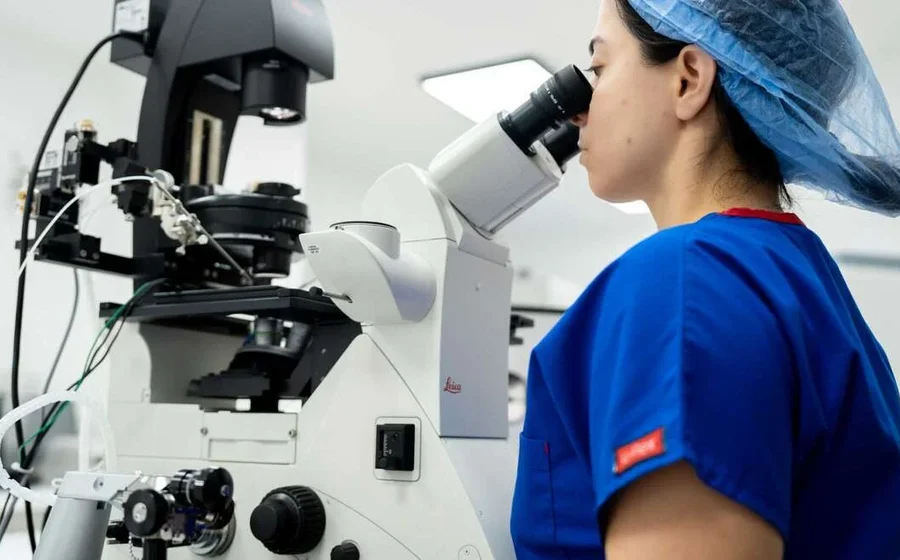
Understand the treatment in 1 minute
The embryo is usually cultured until day 5 or 6; a suitable blastocyst is then placed into the uterus using a thin catheter.
It may be considered in patients with a sufficient number of developing embryos when extended culture is judged clinically appropriate.
Expansion, the inner cell mass and trophectoderm appearance are assessed; these findings do not guarantee pregnancy.
Medication is continued after fresh or frozen transfer and the scheduled beta-hCG test should be awaited regardless of symptoms.
Key information
Blastocyst transfer is the transfer into the uterus of an embryo that has been cultured for longer in the laboratory and assessed on day 5 or 6 of development.
In brief:
A blastocyst is an advanced embryo stage in which the inner cell mass, trophectoderm and fluid-filled cavity have become distinct. Transfer may be performed in a fresh cycle, or the blastocyst may be vitrified and warmed in a later FET cycle.
During the first days after fertilisation, the embryo undergoes cell divisions. At around day 3 it is at the cleavage stage, then progresses through the morula stage towards the blastocyst stage. In a blastocyst, the inner cell mass that contributes to the fetus and the trophectoderm that contributes to the placenta can be distinguished morphologically.
Following embryos to the blastocyst stage can help rank those that continue to develop. However, longer laboratory culture does not mean that every embryo will become a blastocyst. Particularly when only a small number of embryos are available, the choice between day-3 transfer and blastocyst culture should be individualised.
Blastocyst grade describes microscopic appearance only. A blastocyst that looks morphologically good may still have a chromosomal abnormality, while a lower-grade blastocyst may result in pregnancy. Grading should therefore be considered together with age, developmental day, previous outcomes and any available genetic report.
Comparing transfer days
The main difference is how long the embryo is observed in the laboratory and at which developmental stage the transfer decision is made.
The embryo is usually transferred to the uterus when it is at the 6–10-cell cleavage stage.
The embryo is allowed to reach a more advanced developmental stage in the laboratory.
Which transfer day is better?
There is no single correct transfer day for every patient. Embryo number, age, previous embryo development, laboratory performance, PGT plans and transfer history should be considered together.
Suitability assessment
Blastocyst transfer is not an automatic standard; it is an approach selected according to embryo development and the patient’s clinical characteristics.
After extended culture, it may be possible to select among embryos that continue to develop.
Embryo development from previous cycles can be reviewed to assess whether blastocyst culture may provide additional information.
In patients with a favourable prognosis, blastocyst ranking can be used as part of a single-embryo strategy intended to reduce multiple-pregnancy risk.
Trophectoderm biopsy is most often performed at an appropriate blastocyst stage; however, the indication for PGT must be assessed separately.
Suitable blastocysts may be vitrified and stored for use in an FET cycle in which the uterus is prepared separately.
Embryos created with donor oocytes may also be transferred at the blastocyst stage when development and the clinical plan are appropriate.
No. Day-3 transfer may be considered in patients with very few embryos, limited blastocyst development in previous cycles or a clinical reason for earlier transfer.
No embryo suitable for transfer may remain. This possibility should be discussed before treatment in the context of embryo number and previous laboratory outcomes.
Pre-treatment planning
Blastocyst transfer requires planning across the full treatment pathway, not just the transfer day, from ovarian stimulation through embryo culture.
The numbers of oocytes collected, mature oocytes, fertilised oocytes, day-3 embryos and blastocysts are reviewed.
AMH, antral follicle count, age and previous ovarian response can help estimate the likely number of embryos available.
Semen analysis, previous fertilisation results and, when relevant, plans for surgical sperm retrieval are reviewed.
The fertilisation method is selected according to sperm, oocyte and previous treatment information; blastocyst transfer is a separate stage.
The endometrium, uterine cavity and findings such as polyps, fibroids or fluid that could affect transfer are assessed.
Hormone levels, OHSS risk, progesterone timing, endometrial conditions and any need for PGT may influence transfer timing.
The relationship between transferring one or more embryos and the risk of multiple pregnancy is explained.
In a fresh cycle, oocyte collection and embryo-development days are scheduled; in FET, endometrial preparation and progesterone timing are planned.
Step-by-step process
The process progresses from preparation of oocytes and sperm through blastocyst culture to ultrasound-guided embryo transfer.
Medical history, ovarian reserve, sperm findings and previous embryo development are reviewed.
Follicles are stimulated with medication and monitored with ultrasound and hormone tests.
Mature oocytes are collected and the sperm sample is prepared in the laboratory.
IVF or ICSI is performed and fertilisation is assessed the following day.
Embryos are monitored under controlled incubator conditions until day 5 or 6.
Expansion, inner cell mass, trophectoderm and developmental timing are recorded.
If uterine and hormonal conditions are suitable, transfer may proceed; otherwise, freezing may be planned.
The selected blastocyst is placed into the uterus using a catheter; medication instructions and the pregnancy-test date are explained.
Embryology assessment
Laboratories record the stage of blastocyst expansion and the appearance of two main cell groups. The grading notation used may vary between laboratories.
Formation and expansion of the blastocyst cavity and the stage of hatching are assessed.
The appearance and organisation of the cell group that contributes to the fetus are assessed.
The number and integrity of cells in the outer layer that contributes to the placenta are assessed.
Does a high grade guarantee a healthy baby?
No. Morphology classifies microscopic appearance; it does not provide certainty about chromosomal status, implantation or live birth. Pregnancy is not guaranteed even if PGT has been performed.
Waiting period after transfer
The main principles are to use medication as prescribed, continue safe daily activities and perform the pregnancy test on the correct day.
After a short rest, you can walk and return to light daily activities. Prolonged bed rest is not routinely required.
Progesterone and other supportive medications should be continued on the days and at the times specified by the clinic and should not be stopped because of symptoms.
A beta-hCG test is commonly planned around 9–12 days after transfer. Earlier home tests can be misleading.
Treatment schedule
The transfer procedure is brief, but several days of laboratory development are required after oocyte collection and fertilisation for a blastocyst to form.
Follicle development and monitoring.
Usually 8–12 days
Collection of mature oocytes.
On the day of the procedure
IVF or ICSI and assessment the following day.
Day 1
Monitoring blastocyst development.
5–6 days
Catheter placement under ultrasound guidance.
A few minutes
Beta-hCG and follow-up.
Approximately 9–12 days later
For international patients
In a fresh cycle, the schedule may be longer because it includes ovarian monitoring, oocyte collection and 5–6 days of embryo culture. For frozen blastocyst transfer, if monitoring can be completed where you live, travel may be planned close to the transfer date. Flights and accommodation should be finalised only after the clinic confirms the dates.
Realistic expectations
Reaching the blastocyst stage is an important developmental milestone, but it does not by itself guarantee implantation or live birth.
Age is one of the main factors associated with chromosomal risk and the embryo’s biological potential.
Maturity, fertilisation and early embryo development can affect the number of blastocysts available.
Whether an embryo reaches the blastocyst stage on day 5, 6 or later is considered together with other quality information.
Expansion, inner cell mass and trophectoderm appearance are used in embryo ranking.
The uterine cavity, endometrial development and progesterone timing may influence transfer outcomes.
Temperature, pH, gases, air quality, incubators and quality control support stability of the culture environment.
Ultrasound guidance, a soft catheter and gentle passage support procedural safety.
Smoking, uncontrolled chronic conditions and some lifestyle factors may affect pregnancy outcomes.
The embryo reaches an advanced culture stage.
The embryo attaches to the endometrium.
A gestational sac is seen on ultrasound.
The final clinical outcome of treatment.
Individual treatment scope
Blastocyst transfer is usually part of IVF or ICSI treatment. The total cost varies according to how the embryo is created and whether transfer is performed fresh or after freezing.
Embryo culture and quality control
Blastocyst culture requires the embryo to be monitored for several days under stable temperature, pH, gas and air conditions. Technology supports embryologist assessment; it does not guarantee an outcome.

Controlled culture for 5–6 days
From fertilisation assessment to the blastocyst stage, cell divisions, morula formation, expansion and cellular structures are recorded. Decisions about transfer, vitrification or continued observation are made using clinical and laboratory information together.
Helps record embryo-development images without repeatedly removing embryos from the incubator. Clinical benefit may vary according to the patient and application.
Morphokinetic and imaging data may provide additional information for embryo ranking; they do not replace embryologist and physician judgement.
Provides an additional safety layer across the identity chain linking oocyte, sperm, culture dish, freezing carrier and transfer catheter.
Supports standardisation of staff, equipment, documentation, quality control and specimen-safety processes. Ventus IVF Center Laboratory carries CAP number 9751707.
Monitoring volatile organic compounds, particles, temperature, humidity and gas mixtures supports stability of the embryo culture environment.
Maintenance and verification records for incubators, microscopes, sensors and alarm systems are monitored to support laboratory continuity.
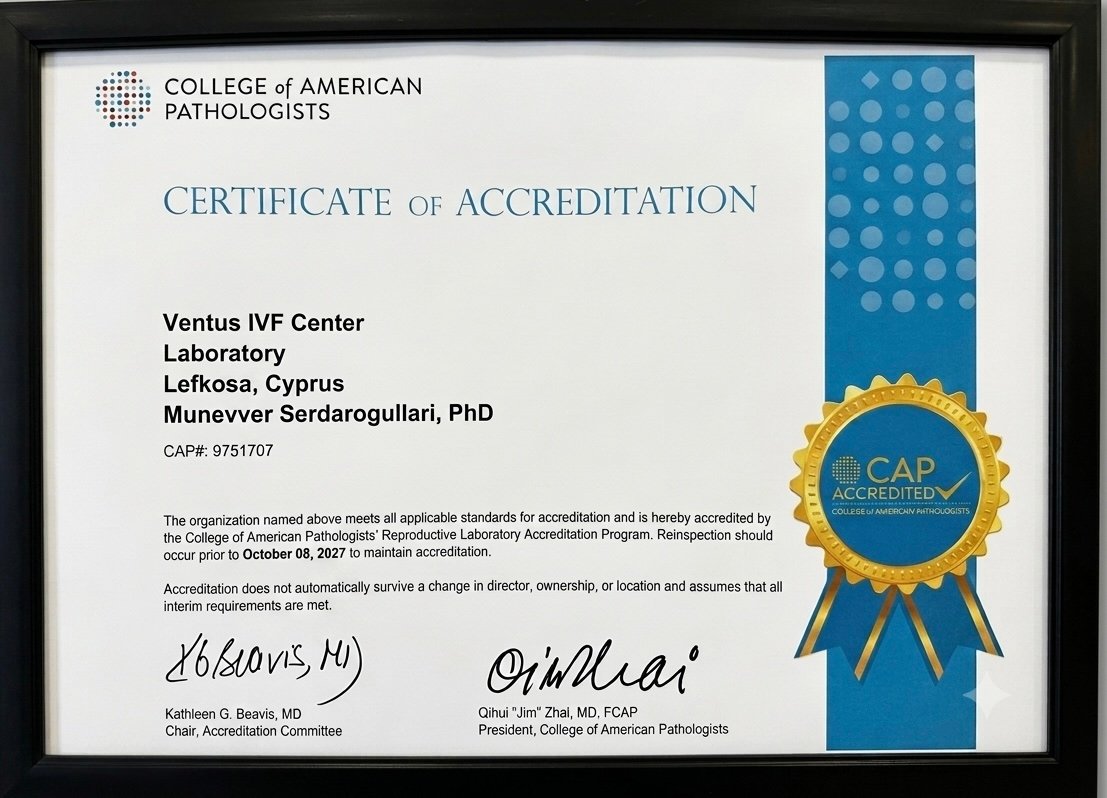
College of American Pathologists
Accreditation reflects the laboratory quality system; it does not guarantee that an embryo will become a blastocyst, implant or result in live birth.
Blastocyst culture and transfer require coordination between the physician managing the treatment protocol, scientific quality processes and the embryology laboratory assessing daily embryo development.

Treating physician
Treatment suitability, personalised protocol, clinical monitoring and embryo transfer planning.

Scientific Director
Scientific processes, laboratory standards and quality approach

Embryology laboratory
Fertilisation, embryo culture, development assessment, laboratory safety and traceability processes.
Transparent information
Blastocyst transfer can be a useful strategy in suitable patients, but it cannot be guaranteed that all embryos will tolerate extended culture or that transfer will result in pregnancy.
None of the embryos may reach the blastocyst stage and the planned transfer may therefore be cancelled.
Extended culture may result in fewer embryos remaining for transfer or freezing.
A blastocyst that appears good morphologically may still fail to implant; morphology does not guarantee live birth.
Transferring more than one blastocyst can significantly increase the risk of twins or higher-order multiple pregnancy.
A small increase in the risk of monozygotic twinning has been reported with blastocyst culture; the absolute risk remains low.
Not every frozen blastocyst will retain viability to the same degree after warming.
Grade or developmental day does not determine chromosomal status with certainty. PGT is neither routine for every patient nor a guarantee.
EmbryoScope+, artificial intelligence, CAP accreditation or an experienced team cannot guarantee live birth.
Patient questions
Explore common questions about day-5 embryo development, transfer timing, grading, the post-transfer period and factors affecting outcomes.
Blastocyst transfer is the transfer into the uterus of an embryo that has developed in the laboratory, usually until day 5 or 6 after fertilisation. Some embryos may reach the blastocyst stage later.
A blastocyst most commonly forms on day 5 or 6 after fertilisation. Because developmental speed varies, some embryos may reach the blastocyst stage on day 7.
It may be considered in patients with a sufficient number of embryos showing developmental potential, suitable laboratory culture conditions and a clinical plan for day-5 transfer.
No. Not every fertilised oocyte reaches the blastocyst stage. Some embryos stop developing before or after day 3. Blastocyst culture therefore also carries a risk that no embryo remains suitable for transfer.
A day-3 embryo is at the cleavage stage, whereas a blastocyst has developed for longer and has identifiable inner cell mass and trophectoderm structures. The appropriate transfer day depends on embryo number, development and treatment history.
No. Blastocyst transfer may offer advantages in some patients with a favourable prognosis, but day-3 transfer may be more appropriate when only a small number of embryos are available or previous development has been limited. Individual assessment is required.
The number of embryos is determined according to age, embryo quality, previous treatments, multiple-pregnancy risk and applicable rules. In suitable patients, single-blastocyst transfer may be prioritised to reduce multiple-pregnancy risk.
Both are blastocysts, but their developmental speed differs. Developmental day alone does not determine outcome; it is considered with morphology, expansion, freezing or transfer plans and other clinical information.
Grading describes morphological features such as degree of expansion, inner cell mass and trophectoderm appearance. It is a ranking tool; it does not guarantee chromosomal normality or pregnancy.
A blastocyst may be transferred fresh in the same oocyte-collection cycle or vitrified and warmed in a later FET cycle. The choice depends on uterine conditions, hormones, OHSS risk and the treatment plan.
For most patients the procedure is brief and may feel like mild pressure similar to a cervical smear. Anaesthesia is generally not required unless there is a specific technical difficulty.
Prolonged bed rest is not routinely required. Normal daily activities can usually be resumed after a short rest; walking or using the toilet will not cause the embryo to fall out of the uterus.
The test date depends on whether the cycle is fresh or frozen and on the clinical protocol. Blood beta-hCG is commonly planned approximately 9–12 days after transfer.
Mild cramping, spotting or breast tenderness may occur, or there may be no symptoms. These findings can also be caused by medication and do not reliably indicate pregnancy.
No. PGT is a separate genetic-assessment option and is not routinely used for every patient. Indications are determined according to age, genetic history, carrier status, previous treatments and counselling.
No. Time-lapse imaging provides developmental information without repeatedly removing embryos from the incubator; it does not guarantee that an embryo will become a blastocyst, reveal chromosomal status or result in pregnancy.
The transfer procedure usually takes only a few minutes. However, the embryo generally requires 5–6 days of laboratory culture after fertilisation to reach the blastocyst stage.
In a fresh cycle, the stay may be longer because of oocyte collection and embryo development. For frozen blastocyst transfer, if monitoring can be completed abroad, travel may be planned close to the transfer date; the exact duration depends on the individual schedule.
The overall cost may be affected by the scope of IVF or ICSI, medications, embryo culture, fresh or frozen transfer, vitrification, storage, PGT and additional laboratory procedures.
Related information
Explore treatments related to embryo creation, assessment, freezing and transfer.
Your personalised embryo-development plan
Send your previous oocyte-collection, fertilisation, day-3 and blastocyst reports. We can review your transfer strategy according to embryo number, developmental history, uterine conditions and travel plans.
This content has been prepared with reference to current guidance from professional and regulatory organisations on blastocyst culture, selection of transfer day, embryo grading and the number of embryos transferred.
Message us on WhatsApp for information about treatments, the process and planning your visit to Cyprus.