Procedure
One selected sperm is injected into a mature oocyte using a micropipette.

ICSI is an advanced fertilisation method in which an experienced embryologist places a single sperm cell directly into a mature oocyte with microscopic precision. The decision to use ICSI is individualised after considering semen analysis, oocyte characteristics and previous treatment outcomes together.
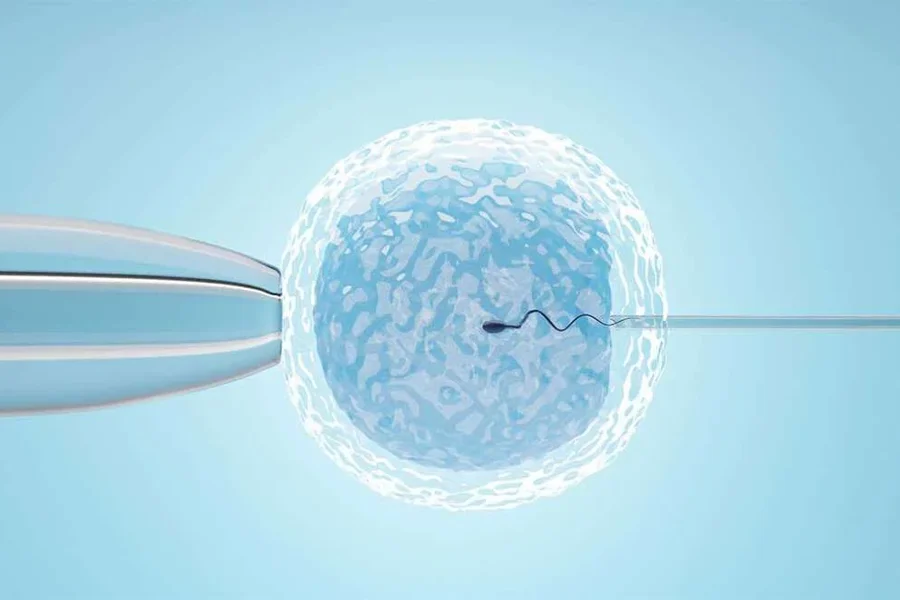
One selected sperm is injected into a mature oocyte using a micropipette.
It may be considered in selected cases involving significant male factor infertility, surgically retrieved sperm, or previous low or failed fertilisation.
Oocyte maturity is checked, sperm is prepared and the microinjection procedure is performed by an experienced embryologist.
Fertilisation is checked, embryo development is monitored and an individual fresh or frozen embryo transfer plan is prepared.
ICSI stands for “Intracytoplasmic Sperm Injection”. It is a laboratory fertilisation method used as part of IVF treatment.
During ICSI, an embryologist uses a very fine injection pipette to place one selected sperm cell into the cytoplasm of a mature oocyte. The aim is to support fertilisation when sperm may have difficulty penetrating the oocyte on its own.
ICSI is not a separate pregnancy treatment; it is one of the fertilisation methods used during the laboratory stage of IVF. Ovarian stimulation, oocyte collection, embryo culture and transfer planning follow the same overall IVF pathway. The key difference from conventional IVF is how the oocyte and sperm are brought together in the laboratory.
Before the procedure, the cells surrounding the oocytes are carefully removed and oocyte maturity is assessed. Only mature oocytes considered suitable for microinjection are used. The sperm sample is prepared according to concentration, motility and appearance; a selected viable sperm is immobilised and injected into the oocyte.
ICSI can help overcome some barriers at the sperm–oocyte interaction stage, but it cannot guarantee biological fertilisation, healthy embryo development, implantation or live birth. Outcomes are therefore considered separately from fertilisation through to live birth.

In both methods, fertilisation takes place outside the body. The main difference is how sperm reaches the oocyte.
A prepared concentration of sperm is placed in the culture medium with the oocyte. One sperm is then expected to penetrate the oocyte membranes and initiate fertilisation.
The embryologist selects a suitable viable sperm and injects it into a mature oocyte using a very fine pipette. This bypasses the step in which sperm must penetrate the oocyte membranes.
The fact that ICSI is a more technically advanced laboratory method does not mean it automatically produces better outcomes for every patient. Current evidence supports choosing the method according to male factor findings, previous fertilisation results and the characteristics of the gametes being used.
The decision is not based on a single semen-analysis result. Male and female fertility assessment, the number of available oocytes, previous treatments and the laboratory plan are considered together.
ICSI may be considered when the number of motile sperm capable of reaching the oocyte is severely reduced.
Poor progressive motility or significant abnormalities in sperm morphology may make conventional fertilisation more difficult.
A limited number of suitable sperm retrieved through PESA, MESA, TESE or Micro-TESE may be used with ICSI.
It may be considered in a subsequent cycle if conventional IVF previously resulted in no fertilisation or markedly lower fertilisation than expected.
ICSI is an established fertilisation approach for warmed mature oocytes because the surrounding cells have already been removed as part of the freezing process.
It may be preferred in selected situations, such as some PGT-M plans, where contamination by external cells or sperm could affect the accuracy of analysis.
No. In patients with normal semen parameters, no previous fertilisation problem and no specific laboratory indication, routine ICSI has not been shown to increase live-birth rates.
Advanced female age, reduced ovarian reserve, a low number of collected oocytes or unexplained infertility alone may not be sufficient reasons to use ICSI. An individual risk–benefit assessment is required.
The decision to use ICSI is part of the couple’s overall fertility assessment. Current investigations, previous treatment attempts and individual treatment goals are reviewed for both partners.
Duration of infertility, previous pregnancies, miscarriages, surgery, current medication and previous IVF outcomes are reviewed.
Ultrasound findings, ovarian reserve, hormone tests, uterine and tubal history and general health are assessed.
Sperm concentration, motility, morphology and sample quality are evaluated; testing may be repeated when appropriate.
In severe male factor infertility, azoospermia, varicocele or when surgical sperm retrieval is planned, urological review and hormonal or genetic testing may be required.
The number of mature oocytes, fertilisation rates, embryo development and transfer outcomes can directly influence the choice of fertilisation method.
When sperm concentration is extremely low, there is impaired sperm production or a relevant family history, genetic counselling and appropriate testing may be considered.
Ovarian stimulation, monitoring appointments, final maturation injection and oocyte collection are scheduled according to the individual protocol.
For patients travelling from Turkey, the United Kingdom or other parts of Europe, investigations may be reviewed remotely and procedure dates in Cyprus can be planned in advance.
Although the laboratory microinjection procedure itself takes place on a single day, the overall treatment is a multi-stage team process from ovarian stimulation through to pregnancy testing.
Semen analysis, ovarian reserve, previous treatment attempts and individual circumstances are reviewed to decide whether conventional IVF or ICSI is appropriate.
An individual medication protocol is used to support the development of multiple follicles. Monitoring is performed with ultrasound and hormone tests when required.
When the follicles reach an appropriate size, the final maturation injection is timed and oocytes are collected under sedation or anaesthesia.
A fresh sample provided on the same day, a previously frozen sample or surgically retrieved sperm is prepared in the laboratory and suitable viable sperm cells are selected.
The surrounding cells are removed from collected oocytes. Only mature oocytes at the metaphase II stage that are suitable for ICSI are used.
The oocyte is stabilised with a holding pipette. One selected sperm is introduced into the oocyte with an injection pipette, after which the oocyte is returned to a controlled culture environment.
The following day, the oocytes are assessed for signs of normal fertilisation. Developing embryos are monitored according to the laboratory protocol and a transfer or freezing decision is made.
A suitable embryo may be transferred fresh or as a frozen embryo in a later cycle. A blood beta-hCG test is performed on the date specified by the clinic.
ICSI is performed in the embryology laboratory while the patient is not in the laboratory. Oocytes and the sperm sample are prepared using identity-verification steps. The laboratory team processes only mature oocytes considered suitable for injection.
Injected oocytes are cultured under controlled conditions. The following day, the number showing normal fertilisation is reported. Oocytes that do not fertilise or show abnormal fertilisation are not used for transfer.
The cleavage pattern of fertilised oocytes is monitored. Depending on embryo number and development, endometrial preparation and the medical plan, fresh transfer, extended blastocyst culture or freezing may be selected.
The ICSI laboratory procedure is carried out on the day of oocyte collection. The overall treatment duration varies according to the protocol, embryo development and whether a fresh or frozen embryo transfer is planned.
Collection of investigations and preparation of an individual treatment plan.
VariableMedication use and ultrasound monitoring.
Approximately 8–12 daysOocytes are collected, sperm is prepared and microinjection is performed.
Same dayFertilisation and development checks.
Usually 3–6 daysThe decision is made according to the endometrial and embryo plan.
IndividualisedThe clinic provides a date according to the type of embryo transfer.
On the specified dayIf pre-treatment investigations and medication monitoring can be completed in your country of residence, the required stay in Cyprus may be shorter. Oocyte collection, embryo monitoring and transfer may take place during the same visit or on different dates. The exact schedule is prepared by the patient coordinator after your medical records have been reviewed.
Explore international patient coordinationICSI supports the step in which sperm enters the oocyte. The final treatment outcome is influenced by the oocyte, sperm, embryo, uterus and the laboratory process as a whole.
With increasing age, both the number of oocytes and the likelihood of obtaining chromosomally suitable embryos may change.
The number of mature oocytes suitable for ICSI is as important as the total number of oocytes collected.
Availability of viable sperm, motility, morphology and the underlying cause of male infertility may affect the process.
Fertilisation rates and embryo-development records provide important information for planning subsequent treatment.
After normal fertilisation, cleavage pattern, developmental rate and blastocyst formation are monitored.
Endometrial preparation, intrauterine pathology and transfer timing may influence implantation.
Air quality, temperature, pH, gas conditions, equipment controls and embryologist expertise are important elements of the laboratory environment.
Smoking, significant excess weight, uncontrolled medical conditions and some environmental factors may affect reproductive health.
Evidence of normal fertilisation in an injected mature oocyte.
Progression of the fertilised oocyte through appropriate cell division.
Identification of an intrauterine gestational sac on ultrasound.
A pregnancy resulting in the birth of a live baby.
These four outcomes are not the same. A laboratory fertilisation rate alone does not represent the probability of clinical pregnancy or live birth.
The cost of ICSI may include more than the microinjection procedure itself. The overall treatment scope varies according to investigations, medication protocol, sperm-retrieval method, embryo culture and additional laboratory requirements.
Successful laboratory practice in ICSI involves more than the movement of a micropipette. Correct identity tracking of cells, appropriate preparation of sperm and oocytes, equipment quality control and stability of the embryo-culture environment are all part of the process.
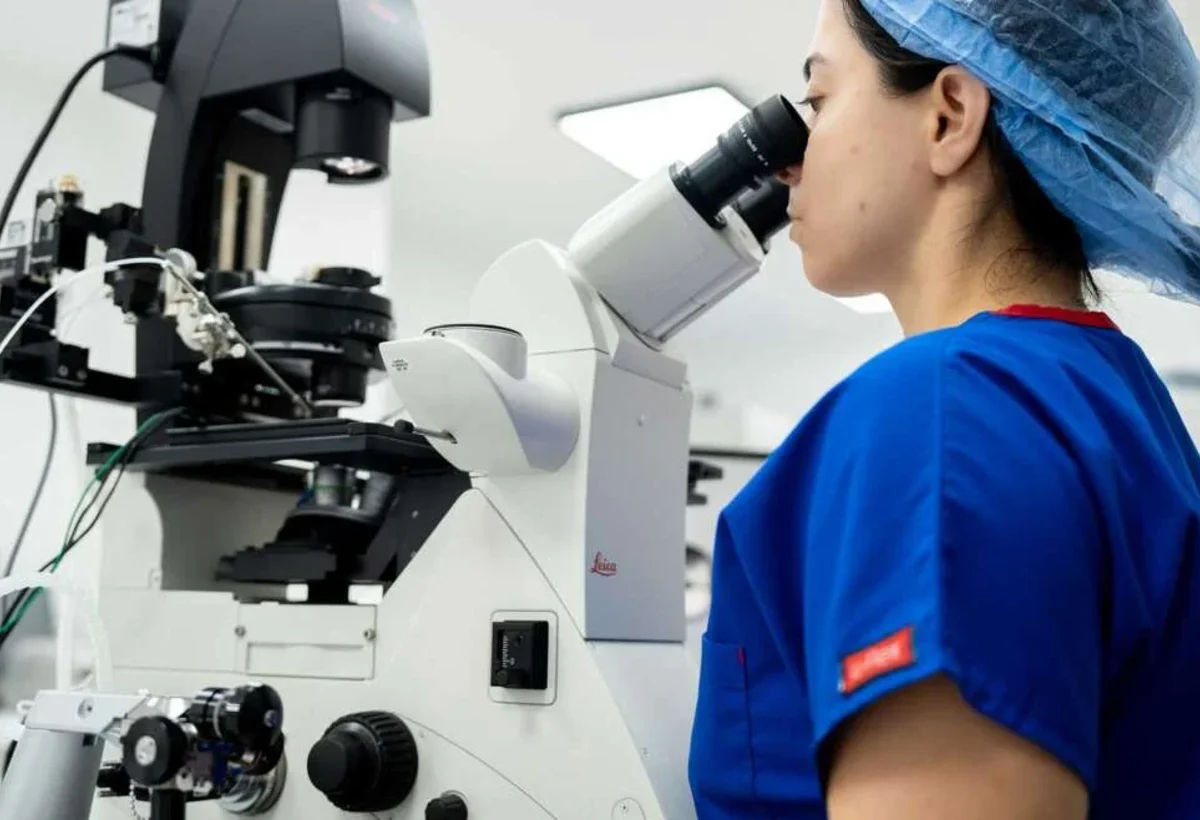
On the day of ICSI, the sperm sample is prepared, oocyte maturity is assessed and every suitable oocyte is processed at a micromanipulation workstation. After injection, the oocytes are returned to controlled incubator conditions and fertilisation assessment is scheduled.
Laboratory processes are standardised across areas such as staff competency, equipment monitoring, quality control, documentation and traceability. The Ventus IVF Center Laboratory CAP certificate carries CAP number 9751707.
Designed to support verification of patient identity and continuity of records throughout sperm, oocyte and embryo procedures. It is used as an additional safety layer rather than as a replacement for human checks.
With appropriate systems, data derived from sperm or embryo images may be used to support embryologist judgement. Final selection remains an expert decision and does not guarantee an outcome.
In clinically appropriate cases, microfluidic systems may be used during sperm preparation. They are not required for every patient and are considered separately from the decision to use ICSI.
Allows developing embryos after ICSI to be imaged at defined intervals, records developmental timing and supports embryologist assessment.
Oocytes and embryos are sensitive to environmental changes. Control of filtration, pressure, temperature, gases, humidity and volatile organic compounds supports stability of the culture environment.
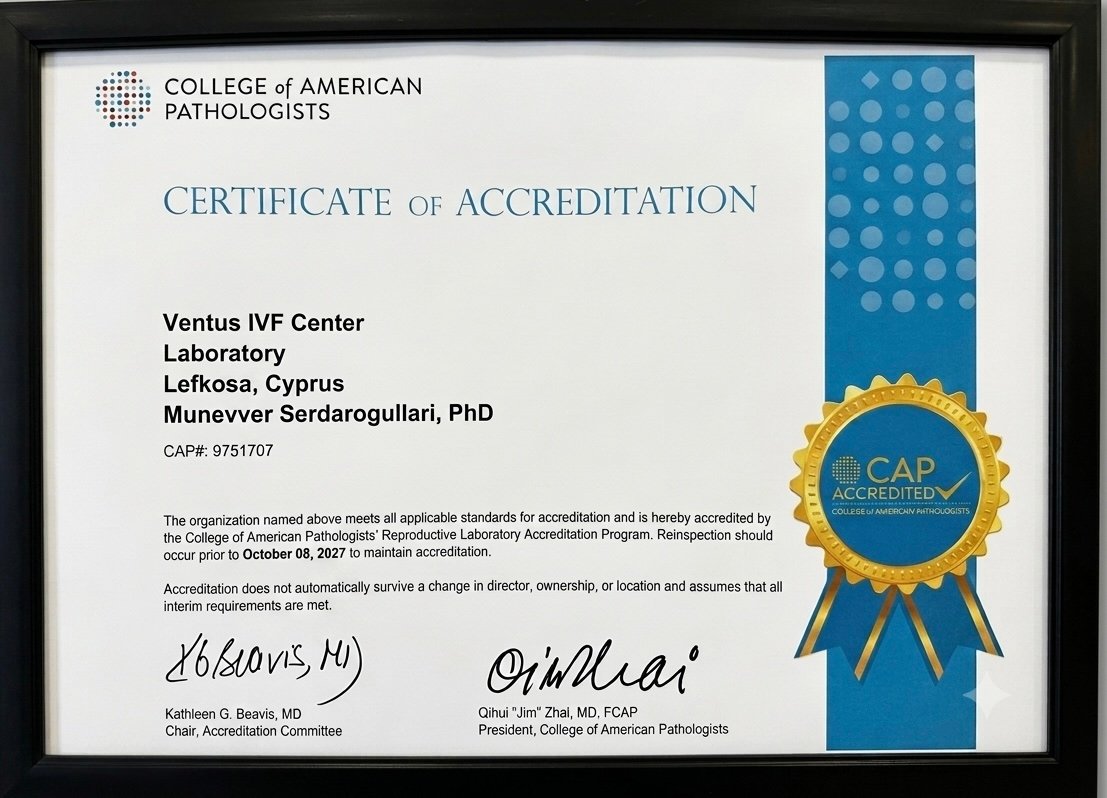
The certificate states that the laboratory is accredited under the CAP Reproductive Laboratory Accreditation Program and indicates that reinspection is due before 8 October 2027.
The decision to use ICSI and its laboratory application are coordinated between the IVF specialist, scientific leadership and the embryology laboratory.

Ventus IVF Clinical Director · Obstetrics, Gynaecology and IVF Specialist
View profile
Scientific processes, laboratory standards and quality approach
View profile
Although ICSI is an effective laboratory method for supporting fertilisation, it does not eliminate biological uncertainty. Individual risks and alternatives should be discussed before treatment.
Although very fine pipettes are used, an oocyte can be damaged during injection and may no longer be suitable for use.
Not every collected oocyte will necessarily be mature. The number of oocytes suitable for ICSI may therefore be lower than the total number collected.
Even when a sperm is placed inside the oocyte, normal fertilisation may not occur or development may stop at an early stage.
Severe disorders of sperm production may have a genetic cause. Genetic counselling and testing may be recommended when appropriate.
Risks such as those associated with ovarian stimulation, oocyte collection, anaesthesia, embryo transfer and multiple pregnancy relate to the wider IVF treatment process.
ICSI can facilitate the fertilisation step; it cannot guarantee a good-quality embryo, pregnancy, healthy pregnancy or live birth.
In patients without male factor infertility or previous fertilisation failure, routine ICSI has not been shown to increase live-birth rates.
Methods such as IMSI, PICSI or other sperm-selection add-ons should not be assumed to be superior to standard ICSI for every patient; the evidence and individual indication should be considered.
We answer common questions about treatment decisions, the laboratory process, cost scope and planning a stay in Cyprus.
ICSI is the placement of one selected sperm cell directly into a mature oocyte using a very fine microinjection pipette. Oocyte collection, embryo culture and embryo transfer continue within the overall IVF pathway; ICSI is the fertilisation method used in the laboratory.
In conventional IVF, prepared sperm cells are placed in the same culture environment as the oocytes and one sperm is expected to enter the oocyte independently. In ICSI, one selected sperm is injected directly into a mature oocyte.
It may be considered when there is markedly reduced sperm concentration, motility or morphology; when sperm has been surgically retrieved; when a previous IVF attempt resulted in no or very low fertilisation; or when warmed oocytes are being fertilised. The final decision is made after reviewing semen analysis, oocyte characteristics and previous treatment outcomes together.
No. Current guidance does not show that routine ICSI increases the chance of live birth in every patient without male factor infertility or a previous fertilisation problem. The method should be selected according to clinical need.
Because ICSI is performed on oocytes in the laboratory, the patient does not feel the microinjection itself. The patient experiences ovarian stimulation, oocyte collection and, when applicable, embryo transfer; appropriate pain relief or anaesthesia is planned for these stages.
Although injection of an individual oocyte is brief, preparation, assessment of oocyte maturity and injection of all suitable oocytes can take several hours according to the laboratory programme. The overall treatment duration depends on ovarian stimulation, oocyte collection, embryo development and the transfer plan.
Oocytes are usually assessed for normal fertilisation the day after injection. Fertilised oocytes are then monitored over the following days for embryo development.
No. ICSI helps bypass the barrier of sperm entry into the oocyte, but fertilisation may still not occur because of oocyte maturity, cellular characteristics, sperm factors and other biological processes.
Outcomes depend on more than the microinjection technique. Female age, ovarian reserve and oocyte quality, number of mature oocytes, sperm characteristics, embryo development, uterine factors, laboratory processes and previous treatment history all contribute.
No. Fertilisation refers to the oocyte and sperm combining and embryo development beginning. Clinical pregnancy refers to seeing a gestational sac on ultrasound, while live birth refers to a pregnancy resulting in a live-born baby. These outcomes should not be used interchangeably.
Yes. Suitable viable sperm retrieved by PESA, MESA, TESE or Micro-TESE may be used for ICSI. The retrieval method and whether sperm is used fresh or after freezing are planned by the urology and embryology teams.
ICSI is a commonly established approach for fertilising warmed mature oocytes. Oocytes that survive warming and are considered suitable are assessed by the embryology team.
Although the procedure is performed by experienced embryologists using very fine micropipettes, the risk of oocyte damage during injection cannot be reduced to zero. Only mature oocytes suitable for the procedure can be used.
Some causes of male infertility may have a genetic basis and may potentially be inherited. In individual cases, it may not be possible to determine precisely how much observed risk relates to ICSI itself and how much relates to the underlying infertility. Genetic counselling and appropriate testing may be considered in severe male factor infertility.
Depending on embryo development, number and quality, endometrial preparation and the clinical plan, a fresh transfer may be performed or embryos may be frozen for transfer in a later cycle. The transfer day is not the same for every patient.
The length of stay depends on whether the full treatment is carried out in Cyprus, whether preparation can be completed in your country of residence and whether a fresh or frozen transfer is planned. After you send your medical records, the patient coordinator can clarify an individual schedule.
The scope can vary according to the clinic and individual treatment plan. Ovarian stimulation and medication, oocyte collection, the ICSI laboratory procedure, embryo culture, freezing and storage, surgical sperm retrieval or genetic testing may be separate items. A written individual treatment plan should be requested.
The pregnancy test date is set by the clinic according to the embryo-transfer day and the protocol used. Because early home testing may be misleading, a blood beta-hCG measurement on the date provided by the clinic is generally preferred.
An ICSI plan should be considered together with the other diagnostic and treatment stages of the IVF pathway.
Send your semen analysis, hormone and ultrasound results and previous IVF reports. We can review why a particular fertilisation method may be recommended and help plan the treatment schedule and your travel to Cyprus.
This content was prepared with reference to the NICE 2026 recommendations on ICSI, the ASRM 2026 committee opinion and HFEA patient information to support an up-to-date clinical approach.
Message us on WhatsApp for information about treatments, the process and planning your visit to Cyprus.