How it works
The processed semen sample is placed into a microchannel device.

Microfluidic sperm selection is a laboratory method designed to prepare motile sperm by using their ability to move through microfluidic channels.
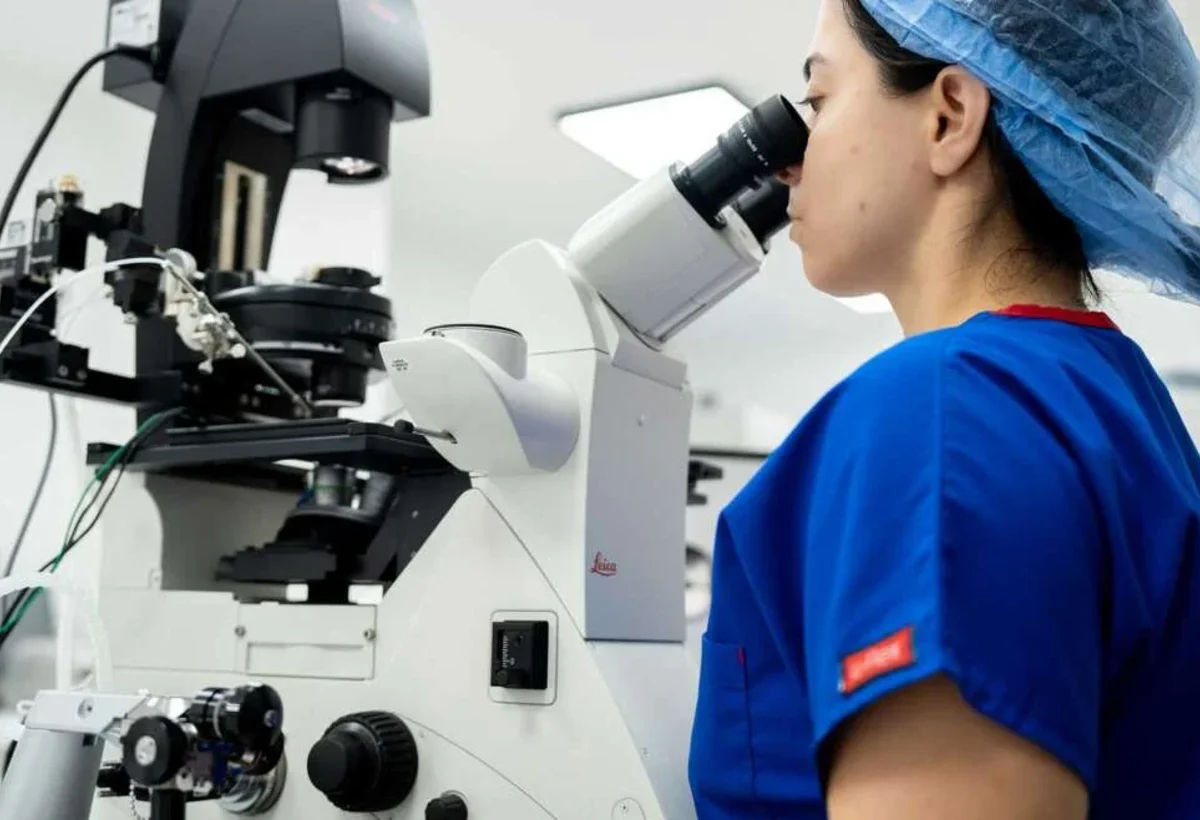
The processed semen sample is placed into a microchannel device.
Motile sperm move through the channels and are collected in a separate chamber.
The selected fraction can be prepared for IVF or ICSI.
It does not guarantee a higher live-birth rate and is not suitable for every sample.
Microfluidic devices are designed to separate sperm cells according to physical movement and flow characteristics.
Semen or a pre-prepared sample is introduced into microchannels; motile sperm move through the channels and are collected in the fraction used by the laboratory.
Conventional sperm-preparation methods include density-gradient and swim-up techniques. Some microfluidic methods aim for gentler separation by reducing centrifugation steps.
Although microfluidic selection may be marketed as a way to reduce sperm DNA fragmentation, clinical outcomes are not conclusive across all patient groups. The method should be selected according to test findings and the laboratory protocol.
In samples with very few sperm, testicular sperm or severely reduced motility, a microfluidic device may not yield enough usable cells.

The methods use different physical separation principles.
A motile sperm fraction is prepared using centrifugation and migration principles.
Sperm are separated by moving through microchannels.
No single method is superior for everyone. Starting sperm count, motility, sample volume and the planned treatment method all influence the choice.
The method is assessed together with standard semen analysis and previous treatment history.
There should be enough cells capable of progressing through the microchannels.
It may be considered in selected cases after the level of evidence has been explained.
It may be discussed as a laboratory option after other possible causes have been assessed.
It is not a routine solution; comprehensive assessment of the couple is required.
The selected sperm fraction can be used for microinjection.
It may be preferred according to the laboratory protocol and sample characteristics.
In severe oligozoospermia, very low motility, azoospermia or surgically retrieved sperm samples, it may not be possible to obtain enough usable cells.
The decision is based on semen characteristics rather than being made randomly on the day of the procedure.
Concentration, motility and volume.
Fertilisation, embryo development and pregnancy outcomes.
Only when there is a clinical indication.
Ejaculated, frozen or surgically retrieved sperm.
Whether conventional IVF or ICSI is planned.
Density-gradient or swim-up options.
Steps can vary according to the laboratory device and protocol.
Identity, volume and semen characteristics are confirmed.
Sperm count and motility are reviewed to assess suitability for the microfluidic device.
The specified sample volume is placed into the microfluidic inlet.
Motile sperm progress through the channels.
Sperm in the outlet chamber are collected.
Count, motility and suitability are reassessed.
The prepared fraction is used in the planned procedure.
The device lot and sample matching details are recorded.
Sperm preparation is incorporated into the laboratory workflow on the day of IVF or oocyte collection.
Provided or thawed on the day of the procedure.
A brief laboratory assessment is performed.
There is a device-specific waiting period.
The collected fraction is examined.
It can be used with the oocytes on the same day.
The method used is added to the laboratory record.
This method does not require a separate trip; it is performed within the laboratory workflow on the day of IVF or ICSI.
Laboratory yield and clinical outcome are different concepts.
Too few cells can limit the microfluidic output.
A key parameter for passage through the channels.
Different microfluidic devices do not use identical principles or deliver identical performance.
Pre-preparation and waiting time can influence the result.
Fertilisation and embryo development do not depend on sperm selection alone.
Device selection, loading and final fraction assessment are important.
Obtaining a more motile sperm fraction does not mean that clinical pregnancy or live birth will necessarily increase.
Cost varies according to the single-use device and the scope of the IVF laboratory procedure.
Single-use microfluidic cartridge.
Suitability assessment on the day of the procedure.
Loading, waiting and fraction assessment.
Use of the selected sperm for microinjection.
Conventional preparation if microfluidic selection is not suitable.
DNA fragmentation testing only when indicated.
Send us your semen results so we can assess whether microfluidic sperm selection is actually indicated.
Correct device use, sample volume and assessment of the final fraction should be managed through a defined laboratory protocol.
The lot number and expiry information of each cartridge are recorded.
Loaded according to manufacturer instructions and laboratory validation.
Migration and collection times are standardised.
The number and motility of collected sperm are assessed.
An alternative preparation method is available if the output is insufficient.
The sample, device and oocyte source are verified.

The method is selected by the physician and embryology laboratory according to semen characteristics.

The laboratory method is assessed together with the female partner’s IVF plan and oocyte quality.
View profile →
Coordinates the clinical rationale for any additional method and the informed-consent process.
View profile →
Operates the microfluidic device, assesses the final sperm fraction and selects sperm for ICSI.
View profile →Microfluidic selection does not replace diagnosis or treatment of underlying male factors such as varicocele, hormonal disorders or azoospermia.
The level of evidence and samples for which the method may not be suitable should be explained clearly.
When count and motility are low, too few usable cells may be recovered.
A live-birth advantage has not been demonstrated in all groups.
Not every microfluidic device produces the same results.
Unnecessary routine use can increase treatment costs.
Incorrect loading or collection is particularly important when sperm numbers are limited.
The method is only a sperm-preparation step.
Use cases and limitations of microfluidic sperm preparation.
It is a laboratory method designed to collect motile sperm in a separate fraction by allowing them to migrate through microchannels.
Some studies have reported fractions with lower DNA damage, but clinical benefit is not certain for every patient.
An increase in live birth cannot be guaranteed; evidence varies by patient group and device.
No. It may not be suitable for samples with insufficient sperm count or motility.
A suitable fraction can be used for ICSI.
Depending on the device and sample characteristics, it may be used for sperm preparation, but it is not routine.
Swim-up relies on sperm swimming into culture medium, whereas microfluidic selection relies on passage through microchannels.
No. Testing is performed only when clinically indicated.
It may not be suitable for many surgical samples because sperm numbers and motility can be very low.
Yes. The final fraction is checked for sperm count, motility and suitability for ICSI.
There may be an additional cost because of the single-use device and laboratory procedure.
No separate stay is required; it is performed in the laboratory on the day of IVF or ICSI.
Message us on WhatsApp for information about treatments, the process and planning your visit to Cyprus.