Procedure
The stored embryo is warmed, its development is assessed and it is placed into the uterine cavity using a thin catheter.

Frozen embryo transfer is a treatment in which an embryo previously created through IVF or ICSI and stored using vitrification is warmed and transferred into the uterus after the endometrium has been prepared in a natural cycle or with medication. The embryo’s developmental stage, post-warming condition, endometrial preparation and progesterone timing are considered together when planning FET.
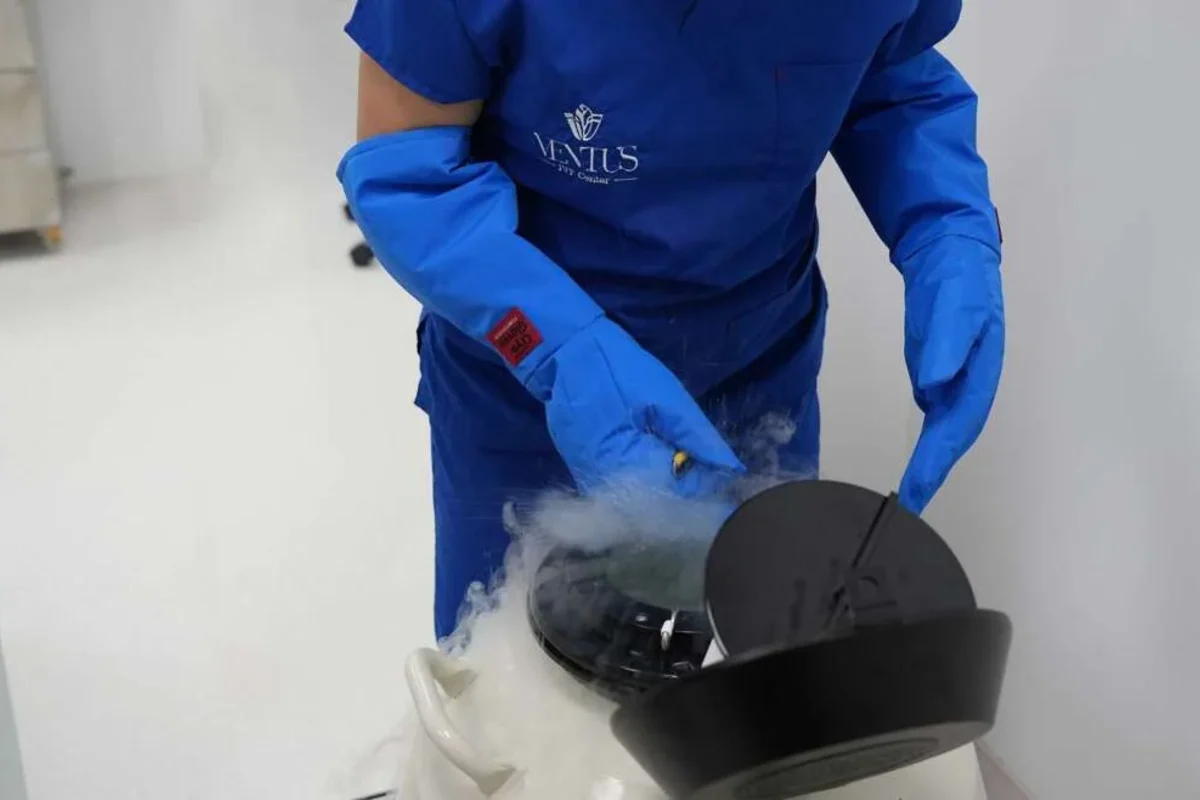
The stored embryo is warmed, its development is assessed and it is placed into the uterine cavity using a thin catheter.
FET may be considered for patients who have frozen embryos from previous treatment, embryos that have undergone PGT, or embryos from a freeze-all cycle.
In patients with regular ovulation, a natural or modified natural cycle may be used; when appropriate, a programmed cycle with oestrogen and progesterone may be considered.
Supportive medication is continued, normal daily activities are resumed and a beta-hCG test is performed on the date advised by the clinic.
Frozen embryo transfer is the process of warming an embryo that was previously created, vitrified and stored at an appropriate developmental stage, and transferring it into the uterus during a new treatment cycle.
No new oocytes or embryos are created during an FET cycle. The endometrium is prepared through natural ovulation or with medication. The embryo is warmed in the laboratory, its suitability is confirmed and it is placed into the uterine cavity using a catheter technique similar to that used for fresh embryo transfer.
Embryos may have been stored because suitable embryos remained after a previous IVF or ICSI treatment, as part of a freeze-all plan, following preimplantation genetic testing, or for fertility preservation. The timing of frozen embryo use is decided according to the patient’s pregnancy plans, uterine assessment, storage records and consent documentation.
An important feature of FET is that ovarian stimulation and oocyte collection do not need to be repeated. However, a seemingly simpler cycle still requires careful planning. Endometrial development, ovulation or progesterone initiation, and whether the embryo is at cleavage-stage or blastocyst stage must be synchronised appropriately.
The embryo is reassessed after warming. Cellular integrity, blastocyst re-expansion and overall developmental appearance are considered when deciding whether to proceed with transfer. It cannot be guaranteed that every frozen embryo will survive warming in the same way or result in pregnancy.
In both methods, the embryo is placed into the uterine cavity using a soft catheter. The main difference is whether embryo creation and embryo transfer take place in the same treatment cycle or in separate cycles.
If clinical conditions are suitable, the embryo is transferred a few days after oocyte collection and fertilisation.
The uterus is prepared in a new cycle; the embryo is warmed according to the planned transfer time and reassessed.
No. Outcomes should be considered according to the patient group, embryo characteristics, age at oocyte collection, uterine factors and clinical needs. A freeze-all strategy may offer safety or timing advantages in some situations, but it does not automatically increase success for every patient.
There is no single standard method of endometrial preparation for FET. Menstrual regularity, ovulation, medical history, monitoring options and scheduling requirements all influence protocol selection.
In patients who ovulate regularly, follicular development and the endometrium are monitored by ultrasound; the LH surge and timing of ovulation are followed within the natural cycle. Transfer is timed according to the embryo’s developmental stage.
The patient’s own follicular development is monitored, while an hCG trigger may be used to control the timing of ovulation more precisely. Luteal progesterone support may be added when appropriate.
The endometrium is developed with oestrogen; once an appropriate appearance is achieved, progesterone is started. This approach may be considered for irregular cycles, ovulatory problems or when more controlled scheduling is needed.
There is no single protocol that is superior for every patient. Regular ovulation, previous FET response, uterine conditions, embryo characteristics and medication-related risks should be considered together.
The duration of endometrial exposure to progesterone needs to match the embryo’s developmental stage. For this reason, the medication start time and transfer time should not be changed arbitrarily.
FET requires a usable frozen embryo and the ability to prepare the uterus safely for transfer. The clinical reason for treatment may differ according to why the embryo was originally frozen.
Suitable embryos stored after an initial transfer can be used in a later pregnancy attempt without repeating oocyte collection.
FET may be used when fresh transfer was not performed because of OHSS risk, hormone–endometrium asynchrony, uterine findings or individual safety considerations.
Embryos frozen after biopsy may be transferred in an FET cycle once the genetic report and clinical assessment have been completed.
Families with embryos stored from a previous IVF treatment may plan FET for a future sibling pregnancy.
Patients who previously froze embryos for medical or personal reasons may proceed to warming and transfer when they are ready to pursue pregnancy.
When transport, consent, identity, storage and laboratory records have been verified, transfer of embryos frozen at another centre may be considered.
No. Quality before freezing, developmental stage, storage and transport records, and survival after warming are assessed. An embryo that does not continue to develop may not be transferred.
The cycle may be cancelled or postponed because of inadequate endometrial development, unexpected ovulation, progesterone-timing problems, fluid within the uterine cavity, infection, uncontrolled medical conditions or incomplete consent/storage documentation.
FET preparation includes review of both the patient’s uterine and general health status and the laboratory records for the embryo.
The treatment in which the embryo was created, age at oocyte collection, developmental day, grade, freezing method, storage location and any PGT result are reviewed.
Authorisation to use the embryo, storage duration, partner or donor consents and identity records are updated before treatment.
The endometrium, uterine cavity, fibroids, polyps, fluid accumulation and other findings that could affect transfer are assessed.
A natural, modified natural or programmed protocol is selected according to cycle regularity, ovulation status and previous hormone results.
When required, hormone levels, thyroid function, infection screening and chronic conditions that may affect pregnancy are reviewed.
The start date, time and route of administration of oestrogen, progesterone, ovulation-trigger medication or other required medicines are explained.
Age at oocyte collection, embryo quality, genetic results, previous attempts and multiple-pregnancy risk are considered together.
The schedule for sending ultrasound and blood-test results from abroad, travel to Cyprus, transfer time and possible date changes is planned.
FET consists of preparing the uterus, synchronising progesterone exposure with the embryo, warming the embryo and performing the transfer under ultrasound guidance.
Embryo records, menstrual regularity, ovulation and uterine findings are reviewed to create a natural or medicated FET plan.
Endometrial development is monitored by ultrasound and hormone levels are checked when required. Follicular development is also monitored in a natural cycle.
In a natural cycle, the LH surge or trigger timing is recorded precisely; in a programmed cycle, the start of progesterone is documented accurately.
For a day-3 embryo or blastocyst, the duration of endometrial progesterone exposure is calculated to correspond with the embryo’s developmental stage.
The embryo is warmed in the laboratory according to the documented protocol; cellular integrity, re-expansion and developmental appearance are assessed.
The patient, embryo, storage record and number of embryos intended for transfer are matched through electronic and physical verification steps.
The embryo is loaded into a soft catheter, passed through the cervix and placed in the planned area of the uterine cavity under ultrasound guidance.
The catheter is checked by the embryologist. After a short rest, instructions are provided regarding continued medication, pregnancy testing and warning symptoms.
After FET, the key points are to continue medication at the correct times, wait until the scheduled test date and contact the clinic promptly if warning symptoms occur.
After a short rest, you can walk, use the toilet and return to normal daily activities. Bed rest or immobility does not increase embryo implantation.
Oestrogen and, in particular, progesterone should be taken at the times stated on the prescription. Medication should not be changed before the test because of spotting or an absence of symptoms.
A beta-hCG test is performed on the date advised according to the embryo stage and protocol. If positive, a repeat blood test and an early pregnancy ultrasound at the appropriate gestational age may be planned.
No. Cramping, spotting, breast tenderness or having no symptoms cannot reliably indicate pregnancy. Oestrogen and progesterone can cause the same symptoms. The outcome should be assessed only with the scheduled pregnancy test.
The total duration varies according to the selected endometrial-preparation protocol and endometrial response. Although the transfer procedure itself is brief, monitoring commonly extends across one menstrual cycle.
Embryo, consent, uterine and protocol planning.
VariableStart of menstruation, baseline ultrasound and medication plan.
Days 1–3Natural monitoring or oestrogen use.
Approximately 1–3 weeksTiming matched to the embryo’s developmental stage.
Personalised scheduleCatheter placement under ultrasound guidance.
Usually a few minutesBeta-hCG and subsequent follow-up.
Approximately 9–14 days laterIf some ultrasound and blood-test monitoring can be completed where you live, travel to Cyprus may be planned close to the transfer date. In a natural cycle, the ovulation date can affect timing; in a programmed cycle, endometrial response and the embryo-warming plan may affect the transfer day. Flight and accommodation arrangements should be finalised only after the clinic coordinator confirms the date.
Explore international patient coordinationThe outcome of FET does not depend simply on the fact that an embryo was frozen. The embryo’s biological potential, post-warming appearance, endometrial preparation and transfer technique all play a role.
Even when an embryo is transferred years later, age at the time the oocyte was collected remains an important factor in chromosomal risk and biological potential.
Whether the embryo is a day-3 embryo or blastocyst, together with its pre-freezing quality and developmental information, contributes to transfer planning.
Cellular integrity, blastocyst re-expansion and continued development are considered during laboratory assessment.
If PGT has been performed, the report provides additional information for transfer planning; however, genetic assessment does not guarantee implantation or live birth.
Endometrial development and appearance, together with intrauterine findings such as polyps, fibroids or fluid, are important.
Matching the start and duration of progesterone exposure to the embryo’s developmental stage is particularly important in programmed FET.
A soft catheter, ultrasound guidance, gentle passage and a correct identity-verification chain support procedural safety.
Smoking, uncontrolled thyroid disease or diabetes, severe obesity and some systemic conditions may affect the chance of pregnancy and live birth.
The embryo passes laboratory assessment after warming.
The embryo begins to attach to the endometrium.
A gestational sac is seen on ultrasound.
The final clinical outcome of treatment.
Storage duration alone does not determine an individual success rate. The embryo’s developmental stage at freezing, quality of vitrification and storage, age at oocyte collection, post-warming condition and uterine factors should be considered together.
It is not appropriate to give one fixed price for FET. Costs may vary according to the endometrial-preparation protocol, monitoring needs, embryo storage and warming procedures, and any additional laboratory requirements.
In FET, the laboratory’s role is not simply to ‘thaw’ an embryo. The entire process should be traceable, from storage records and temperature control to the warming protocol, identity verification and transfer-catheter check.

The embryo’s freezing day, carrier or storage-device information, storage location and consent records are matched with the transfer plan. During warming, temperature and timing steps are carried out according to a documented protocol, and the embryo is reassessed before transfer.
The embryo is cryopreserved using a rapid-cooling vitrification approach and warmed according to documented steps on the day of use. The method can provide high post-warming survival, but this cannot be guaranteed for every embryo.
Provides an additional safety layer linking the patient and embryo across the storage device, embryo record, warming procedure, culture dish and transfer catheter.
Supports standardisation of staff competency, equipment, documentation, quality control, specimen safety and traceability. Ventus IVF Center Laboratory carries CAP number 9751707.
Storage conditions, liquid-nitrogen levels, alarm systems, temperature, equipment maintenance and emergency plans require regular monitoring.
When clinically appropriate, embryo re-expansion and development after warming can be monitored under controlled incubator conditions. This information alone does not guarantee pregnancy.
During warming and short-term culture, control of temperature, pH, gas balance, particles and volatile organic compounds supports stability of the embryo environment.
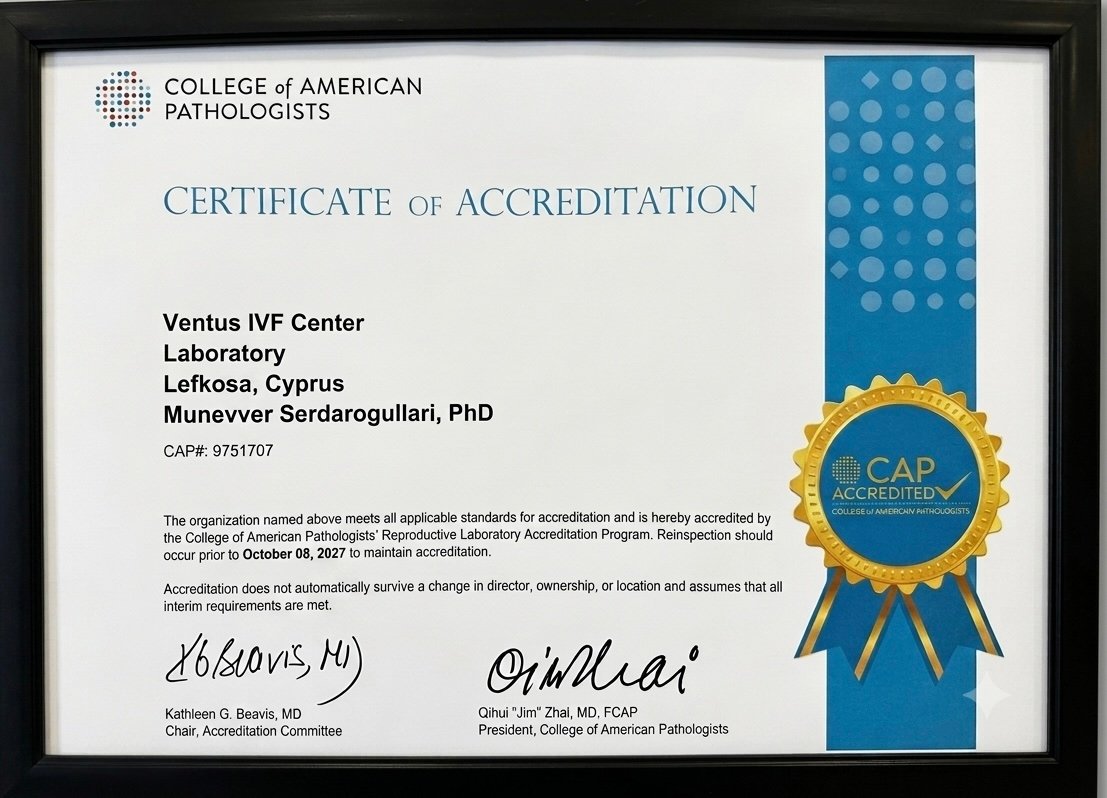
The certificate confirms that the laboratory is accredited under the CAP Reproductive Laboratory Accreditation Program. Accreditation reflects the laboratory quality system; it does not guarantee embryo survival after warming or an individual patient’s pregnancy outcome.
FET requires coordinated work between the physician managing endometrial preparation and the transfer procedure and the embryology team responsible for embryo-storage records, warming, survival assessment, identity verification and catheter loading.

Treatment suitability, personalised protocol, clinical monitoring and embryo transfer planning.
View profile
Scientific processes, laboratory standards and quality approach
View profile
Fertilisation, embryo culture, development assessment, laboratory safety and traceability processes.
View profileFET may involve a less intensive treatment cycle because it does not include oocyte collection; however, risks related to embryo warming, endometrial preparation, medication and pregnancy are not eliminated completely.
Not every embryo will retain viability after warming. If the embryo planned for transfer is not suitable, another embryo may need to be warmed or the cycle may need to be cancelled.
Implantation may not occur even when a viable embryo is transferred. This does not by itself indicate an error in warming or transfer.
Transfer may be postponed because of inadequate endometrial development, premature ovulation, hormone-timing problems, intrauterine fluid or a medical issue.
Oestrogen and progesterone may cause headache, bloating, breast tenderness, mood changes or, rarely, more serious adverse effects.
Transferring more than one embryo increases the risk of twins or higher-order multiple pregnancy. In suitable patients, single-embryo transfer aims to reduce this risk.
Ectopic pregnancy or pregnancy loss can also occur after FET. Early assessment is important if pain or bleeding occurs after a positive pregnancy test.
Morphological grade or a PGT result can provide additional information about an embryo, but neither guarantees implantation, a healthy pregnancy or live birth.
Vitrification, artificial intelligence, EmbryoScope+, CAP accreditation or an experienced team cannot guarantee live birth; biological uncertainty remains.
Explore common questions about FET preparation, embryo warming, the post-transfer period, factors affecting outcomes and travel planning for Cyprus.
Frozen embryo transfer is the process of warming an embryo previously created through IVF or ICSI and stored by cryopreservation, then transferring it into a prepared endometrium. It is also known as FET.
The endometrium is first prepared in a natural cycle or with medication. The embryo is warmed in the laboratory and assessed for survival and development; if suitable, it is placed into the uterine cavity using a thin catheter, usually under ultrasound guidance.
FET may be considered for patients with embryos stored from previous IVF or ICSI treatment, embryos from a freeze-all cycle, embryos that have undergone PGT, or embryos previously frozen for fertility preservation.
Fresh transfer takes place in the same cycle as oocyte collection and fertilisation. FET uses an embryo that was frozen previously and prepares the uterus in a separate cycle. The catheter-based transfer technique is broadly similar.
No. Because the embryo has already been created, ovarian stimulation and oocyte collection are generally not performed during an FET cycle. The process focuses on endometrial preparation, embryo warming and transfer.
Natural-cycle FET involves monitoring follicular development and ovulation in a patient who ovulates regularly, using ultrasound and hormone tests when required. Transfer is timed according to the patient’s natural progesterone exposure.
In a modified natural cycle, the patient’s own follicular development is monitored, but an ovulation trigger may be used to control timing more precisely. Progesterone support may be added according to the individual plan.
In a programmed or hormone-prepared FET cycle, the endometrium is developed with oestrogen and progesterone is started for a duration appropriate to the embryo’s developmental stage. This approach may be considered for irregular cycles, ovulatory problems or when controlled scheduling is needed.
Endometrial preparation may require approximately two to three weeks of monitoring in many protocols. The transfer procedure itself takes only a few minutes; the pregnancy test is usually performed about 9–14 days after transfer depending on the embryo stage and clinical plan.
The timing depends on whether the embryo was frozen at day 3 or blastocyst stage and on the laboratory plan. Many embryos are warmed on the day of transfer; in selected situations, earlier warming and additional culture may be planned.
No. Although vitrification can provide high post-warming survival, a problem-free outcome cannot be guaranteed for every embryo. Before transfer, the embryologist evaluates cellular integrity, re-expansion and developmental appearance.
No single thickness value guarantees pregnancy for every patient. The physician evaluates endometrial thickness together with its appearance, development over time, hormone timing and the uterine cavity when deciding whether to proceed with transfer.
Progesterone moves the endometrium into a biological stage suitable for implantation. The duration of progesterone exposure needs to correspond with the embryo’s developmental stage, making the start time and dose important parts of the individual schedule.
Most patients describe the procedure as similar to a cervical smear, with mild pressure. The speculum, a full bladder or passage of the catheter can cause brief discomfort; anaesthesia is generally not required unless there is a specific difficulty.
Prolonged bed rest is not routinely required. After a short rest, walking, using the toilet and returning to safe daily activities will not cause the embryo to fall out of the uterus.
Mild cramping, spotting, bloating, breast tenderness or no symptoms at all are possible. These findings may also be caused by oestrogen and progesterone and do not reliably indicate implantation.
The test date is determined according to the embryo’s developmental stage and clinical protocol. In many plans, blood beta-hCG is assessed approximately 9–14 days after transfer. Earlier testing can be misleading.
Age at oocyte collection, embryo development and any genetic result, survival after warming, endometrial and progesterone synchronisation, uterine conditions, transfer technique and general health all contribute.
The number of embryos is determined by considering age at oocyte collection, embryo quality, any PGT result, previous attempts, multiple-pregnancy risk and applicable regulations. Single-embryo transfer may be prioritised in suitable patients.
If some monitoring can be completed where you live, travel to Cyprus may be planned close to the transfer date. However, the exact stay should be determined individually by the patient coordinator because ultrasound findings, hormone results, the embryo-warming plan and possible schedule changes can affect timing.
The scope may vary according to medical consultation, ultrasound and hormone monitoring, endometrial-preparation medication, embryo warming, laboratory assessment, transfer procedure, catheter, supportive medication and follow-up. Storage, transport and genetic testing may be charged separately.
Explore embryo freezing, transfer, IVF, ICSI and genetic-assessment processes that may form part of an FET plan.
Send your embryo-freezing report, developmental stage and quality information, storage-centre records, most recent uterine ultrasound and previous transfer outcomes. We can review whether a natural or medicated cycle may be appropriate, together with progesterone timing, the warming plan and travel to Cyprus.
This content has been prepared with reference to current public-health and professional guidance on use of frozen embryos, natural or medicated endometrial preparation, warming and transfer, and approaches intended to reduce multiple pregnancy by limiting the number of embryos transferred.
Message us on WhatsApp for information about treatments, the process and planning your visit to Cyprus.