How it works
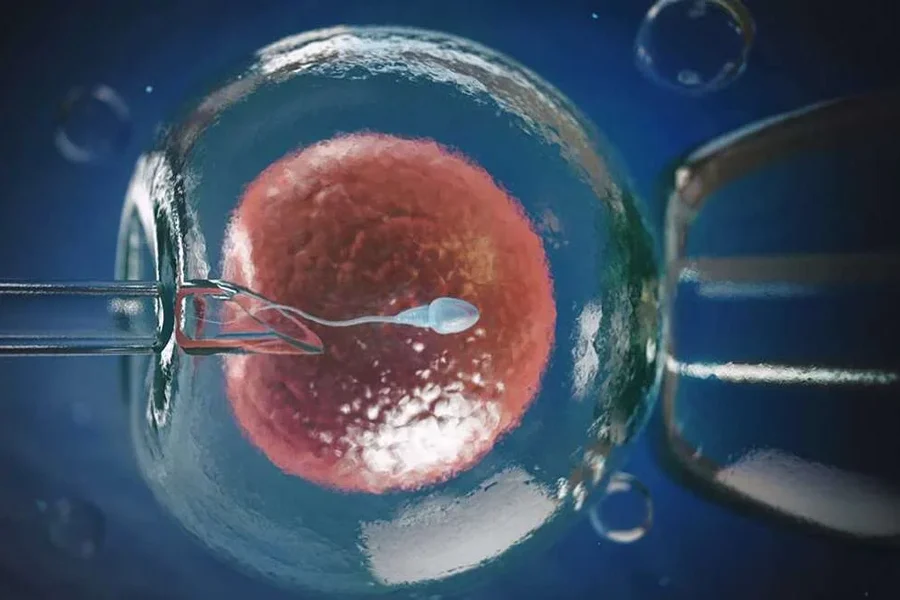
Donor eggs are fertilised with sperm and a suitably developing embryo is transferred into the prepared uterus.

Donation Treatments · Personalised Recipient and Donor Plan
Egg donation is an assisted reproduction treatment in which embryos are created using eggs obtained from a medically screened donor when the likelihood of pregnancy using the patient’s own eggs is significantly reduced.

Understand the treatment in 1 minute
Donor eggs are fertilised with sperm and a suitably developing embryo is transferred into the prepared uterus.
It may be considered in cases of severely reduced ovarian reserve, premature ovarian insufficiency, repeated poor oocyte quality or certain inherited risks.
Eggs are fertilised under identity verification and embryos are monitored according to their development.
Medication support continues after transfer and a pregnancy test is performed on the date specified by the clinic.
Key information
The treatment is based on the egg coming from a donor while the recipient carries the pregnancy.
In brief:
Eggs obtained from an appropriately assessed donor are fertilised with sperm. A developing embryo is transferred into a uterus prepared with hormones or through a natural-cycle approach.
Egg donation may be considered for people whose chance of pregnancy with their own eggs is very low because of ovarian reserve or oocyte-quality factors. Using donor eggs does not remove the need for recipient endometrial preparation and pregnancy follow-up.
The genetic material from the egg comes from the donor. The sperm may come from a partner or another source permitted by applicable regulations. Genetic relationships, privacy and future disclosure should therefore be discussed clearly before treatment begins.
An egg-donation plan in Cyprus should not be recommended solely on the basis of age or an AMH result. Previous IVF attempts, uterine assessment, sperm characteristics, general health, family-building goals and current legal requirements should be considered together.

Treatment options
Both options use donor eggs, but coordination, available egg numbers and timing may differ.
Donor eggs are fertilised after collection.
The recipient’s endometrial preparation can often be planned more independently.
Which option is more successful?
No single option is superior for every patient. Egg quality, warming survival, sperm characteristics, laboratory experience and uterine conditions should all be assessed together.
Suitability assessment
Suitability is determined by considering ovarian reserve, age, previous treatment outcomes, genetic risks and individual decisions together.
It may be considered when eggs cannot be obtained or the likelihood of obtaining usable eggs is very low.
It may be an option when age-related decline in egg number and quality is substantial.
It may be considered when fertilisation or embryo development has remained poor across multiple IVF attempts.
It may be considered when the risk of transmission using the patient’s own eggs is high and no more appropriate option is available.
It may be considered when egg production is no longer possible after surgery or treatment.
After detailed assessment, it may be an option when egg-related factors are thought to contribute to unsuccessful treatment.
Does every low AMH result mean egg donation is needed?
No. AMH mainly provides information about egg quantity; it does not by itself determine oocyte quality or the chance of pregnancy. It should be interpreted alongside age, ultrasound findings, previous ovarian response and personal goals.
Before treatment
The recipient, sperm source and donor are assessed separately but as connected parts of the same treatment plan.
Uterine anatomy, endometrium, hormone status and general health for pregnancy are assessed.
Sperm concentration, motility and morphology are reviewed to help plan the fertilisation method.
IVF, embryo-development, transfer and genetic-testing reports are reviewed.
Medical and family history, infectious-disease testing and appropriate genetic screening are assessed.
Carrier-screening findings from the donor and sperm source are reviewed for overlapping recessive-disease risks.
A natural-cycle or hormone-supported approach is selected and progesterone timing is planned.
Step-by-step process
The actual schedule may vary depending on whether fresh or frozen donor eggs are used.
Medical history, previous treatments and family-building goals are reviewed.
Matching is performed among donor candidates who meet the clinic’s acceptance criteria.
The endometrium is prepared through a natural cycle or with oestrogen and progesterone support.
In a fresh programme the donor undergoes stimulation and egg collection; in a frozen programme, stored eggs are warmed.
Eggs are fertilised with sperm using conventional IVF or ICSI when clinically appropriate.
Embryos are monitored through day 3 or to the blastocyst stage, depending on the treatment plan.
The selected embryo is placed into the uterus under ultrasound guidance.
Medications are continued as prescribed and a blood beta-hCG test is performed on the specified date.
Treatment timeline
The schedule varies according to donor preparation, recipient endometrial preparation and the transfer strategy.
Medical records and investigations can often begin to be reviewed remotely before treatment.
Finding a suitable donor and completing required consent may vary according to individual matching characteristics.
This commonly involves approximately 2–3 weeks of hormone treatment or natural-cycle monitoring.
This usually lasts approximately 3–6 days after fertilisation.
This is commonly planned approximately 9–14 days after embryo transfer.
How many days do I need to stay in Cyprus?
If a sperm sample can be frozen in advance and monitoring can be completed where you live, it may be possible to travel only around the transfer period. A fresh programme, additional procedures or examination requirements may lengthen the stay.
Factors affecting outcomes
Donor eggs may reduce some age-related egg factors, but outcomes still depend on multiple clinical and laboratory variables.
Donor age, ovarian response and laboratory assessment may influence embryo development.
Concentration, motility, morphology and DNA integrity may be associated with fertilisation and embryo development.
Fertilisation, cleavage and blastocyst formation are separate stages.
Endometrial factors, intrauterine pathology and progesterone timing are important.
Stable air, temperature, gas, equipment and culture conditions are important.
Thyroid conditions, diabetes, body weight, smoking and health problems that may affect pregnancy should be considered.
Important distinction:
Fertilisation rate, blastocyst development, clinical pregnancy and live birth are different outcomes. Each stage should be considered separately and none can be guaranteed.
Personalised cost planning
Rather than quoting a single fixed price, the procedures included in an individual treatment plan should be explained clearly.
Screening, matching, medication, monitoring and egg collection.
Fertilisation method, embryo culture and additional techniques when indicated.
Vitrification of eggs or embryos and the planned storage period.
Assessment, investigations, medication and endometrial monitoring.
Carrier screening or tests recommended for a medical indication.
International patient planning, accommodation and transfer coordination.
Send your test results, previous IVF reports and semen analysis so that the fresh or frozen egg option and the scope of treatment can be clarified together.
Laboratory and traceability
Every stage, from receipt of donor eggs through embryo transfer, requires a traceable chain of documentation and verification.
Supports correct association of donor, recipient, sperm sample and embryos with the appropriate patient file.
When ICSI is planned according to sperm characteristics, each egg is handled under its own documented identity pathway.
Embryo development may be monitored in standard incubators or, where appropriate, with time-lapse systems.
Suitable eggs and embryos can be vitrified and stored with traceable records.
Control of temperature, gases, air quality and volatile compounds supports stable embryo culture conditions.
Equipment maintenance, alarm systems, records and specimen safety are checked regularly.
Multidisciplinary approach
Donation treatment is a multi-stage process involving coordinated work between the physician, embryology laboratory, patient coordination team and, when appropriate, genetic counselling.

Obstetrics and Gynaecology Specialist
Manages recipient assessment, endometrial preparation and embryo-transfer planning.

Scientific Director
Contributes to treatment protocols, donation pathways and the scientific quality approach.

Embryology Laboratory Director
Coordinates gamete receipt, identity verification, fertilisation and embryo-culture processes.
Balanced information
Treatment involves medical, psychological and legal considerations.
The recipient’s age and health can affect risks such as hypertension, diabetes and other obstetric complications.
Even when donor eggs are used, fertilisation or blastocyst development may not occur.
Pregnancy may not occur after transfer, and pregnancy loss remains possible.
Transferring more than one embryo increases risks for the pregnant patient and babies.
Screening can reduce risk but cannot eliminate all genetic conditions.
Genetic relationships, privacy, disclosure and country-specific rules should be considered before treatment.
Common questions
These answers are for general information. Individual treatment plans may vary according to medical assessment and applicable regulations.
Egg donation is an assisted reproduction treatment in which eggs from an appropriately screened donor are fertilised with sperm and the resulting embryo is transferred into the uterus of the person who will carry the pregnancy.
It may be considered for people whose likelihood of pregnancy with their own eggs is very low, who have severely reduced ovarian reserve or premature ovarian insufficiency, repeated poor oocyte or embryo development, or certain inherited risks.
The embryo carries genetic material from the egg donor and the sperm source. If the person carrying the pregnancy is not the egg source, there is no genetic relationship through the egg; they carry and give birth to the pregnancy.
Donors are selected within current regulations and clinic acceptance criteria, taking into account medical history, family history, infectious-disease screening, appropriate genetic assessment and any matching characteristics that may legally be considered.
Yes. Medical and family history, physical assessment, infectious-disease testing and clinically appropriate genetic carrier screening may be considered. The exact scope may vary according to country and programme rules.
Blood group and Rh status may be considered during matching, but they do not by themselves determine medical suitability. Priority is given to safe donor screening, genetic-risk assessment and treatment planning.
The recipient’s uterus is prepared with medication or according to a natural cycle. Donor eggs are fertilised with sperm, embryos are monitored in the laboratory and a suitable embryo is transferred on the planned day.
The fertilisation method is selected according to sperm characteristics, the number of available eggs and the laboratory plan. ICSI may often be considered in donor-egg programmes, but it is not automatically required for every patient.
After donor selection and pre-treatment investigations are completed, endometrial preparation and embryo creation are commonly planned over several weeks. A frozen transfer or additional testing may extend the timeline.
Depending on the programme, fresh donor eggs or previously cryopreserved eggs may be used. The options differ in coordination, available egg numbers and laboratory planning.
Depending on embryo development and the clinical plan, transfer may be planned on day 3 or at the blastocyst stage on day 5 or 6. Not every embryo is expected to reach the blastocyst stage.
The number is determined according to age, embryo characteristics, previous treatment, the risk of multiple pregnancy and applicable regulations. The aim includes consideration of a safe singleton pregnancy, not pregnancy alone.
No. Donor eggs may reduce some age-related egg factors, but fertilisation, embryo development, implantation, pregnancy and live birth cannot be guaranteed.
Donor egg quality, sperm characteristics, embryo development, endometrial conditions, transfer technique, laboratory conditions and the recipient’s general health all contribute.
The recipient usually does not undergo egg collection. Medication is used for endometrial preparation, and embryo transfer is generally a brief procedure that does not require anaesthesia; individual sensitivity can vary.
The date is determined by the clinic according to the transfer day and embryo stage. A blood beta-hCG test is commonly planned approximately 9–14 days after transfer.
Some investigations can be completed remotely. The length of stay is personalised according to sperm provision, embryo development and the transfer plan; exact dates should be confirmed by the coordination team.
Donor screening and coordination, donor medication, egg collection, fertilisation, embryo culture, transfer, freezing and storage may affect the overall cost depending on the scope of the plan.
Embryos that remain suitable after transfer may be frozen in accordance with consent and applicable storage requirements.
Genetic relationships, privacy, future disclosure to a child, family communication and long-term expectations should be considered before treatment. Psychological or genetic counselling may support the decision-making process.
Next steps
Personalised donation roadmap
Share your test results, previous IVF and embryo reports, semen analysis and travel preferences. We can consider donor matching, endometrial preparation, laboratory steps and transfer timing within one coordinated plan.
Content is supported by current professional guidance relating to donor and recipient assessment, infection and genetic screening, counselling, laboratory safety and embryo transfer principles.