
AI-Assisted Sperm Selection
Selecting a single sperm cell for microinjection takes place within seconds, yet the decision requires motility, morphology, viability and laboratory experience to be interpreted together. AI-assisted analysis aims to add a more standardised and comparable data layer to the embryologist’s real-time observation.
- Embryologist supervisedFinal sperm selection remains with the experienced embryology team.
- Real timeMotility and image characteristics can be assessed during the procedure.
- Decision supportThe algorithm is added alongside standard sperm preparation and clinical data.
Artificial intelligence does not prove that a sperm is genetically healthy, does not guarantee pregnancy and does not replace the embryologist’s final decision.
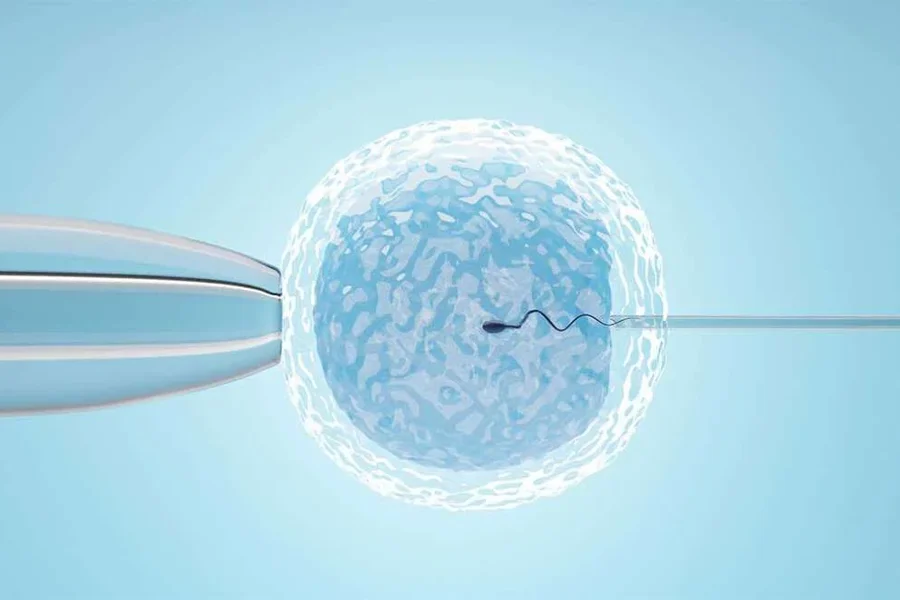 ICSI · Real-time sperm analysis
On your journey towards parenthood, we do not want to assess the selected sperm only on the basis that it “moves”.
We understand the emotional and time investment involved in every treatment attempt. For this reason, we aim to evaluate even small laboratory decisions within the clearest, most traceable and scientifically grounded framework possible.
Our aim is not to claim that we can find the “perfect sperm”, but to support the embryologist’s motility and morphology assessment with more consistent data in appropriate cases.
More standardised observation
Helps analyse similar movement and image characteristics using the same criteria.
Consistency during selection
May provide additional ranking support for the embryologist, particularly when there are many motile candidates.
More detailed records
May make it easier to follow the relationship between sperm selection, fertilisation and embryo development.
Support for specialist judgement
The score is interpreted together with semen analysis, the preparation method and oocyte characteristics.
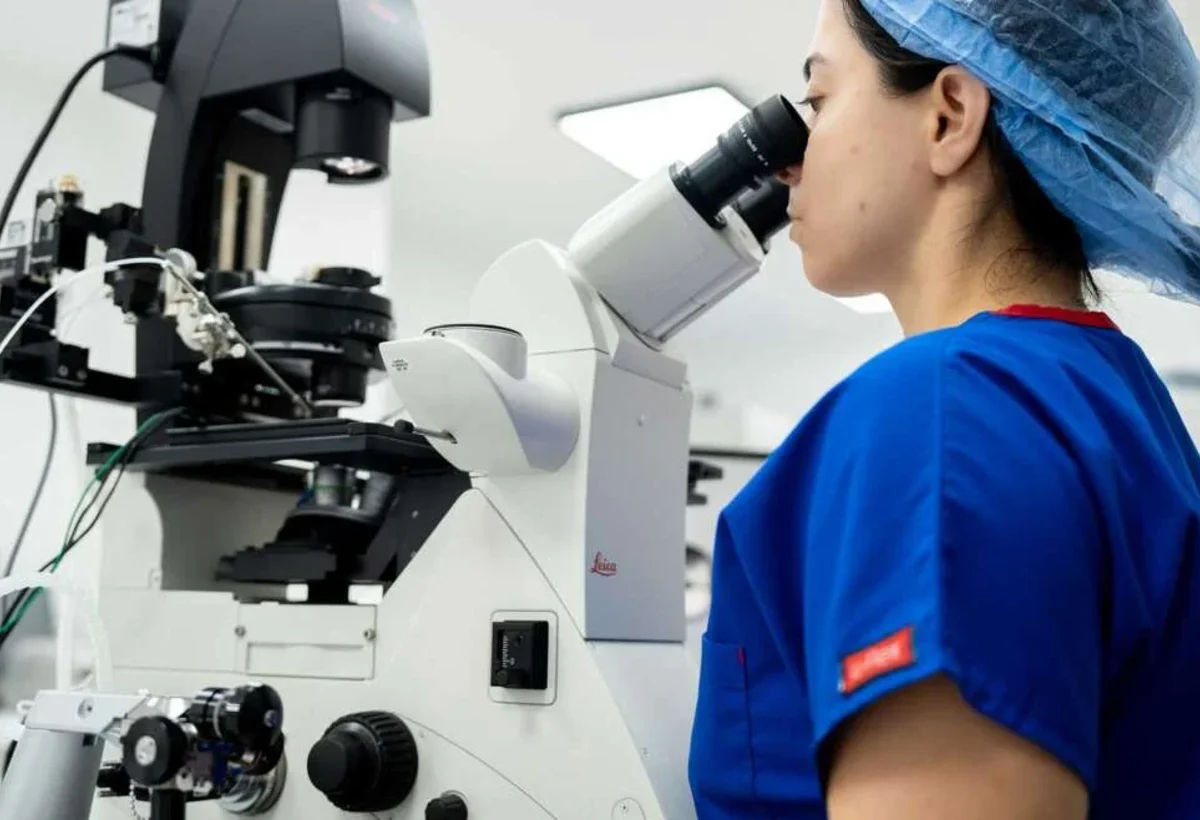
What Is AI-Assisted Sperm Selection?
This approach analyses microscope images or short video recordings of sperm cells using computer vision. Depending on the system, characteristics such as movement speed, progressive direction, and head and tail appearance may be used to generate a score or classification.
Although it is commonly described as “AI sperm selection”, the system does not independently load a sperm cell into the injection pipette or make a clinical decision. The embryologist interprets the algorithmic output together with standard sperm-preparation findings and oocyte characteristics.
Important distinction:A sperm that looks normal may still have DNA damage, while a sperm that appears less ideal may still support healthy fertilisation. Image analysis is not a sperm DNA test or genetic diagnosis.
Sperm selection matters, but the outcome does not depend on sperm alone.
Fertilisation and embryo development are influenced by sperm, oocytes, laboratory conditions and many biological variables together. Artificial intelligence provides additional information only at the sperm-selection link in this chain.
Sperm preparation
The sample is prepared for motile sperm cells according to the laboratory protocol.
Candidate analysis
Motility and image characteristics are assessed using specialist observation and the algorithm.
ICSI
The embryologist injects the single sperm cell considered suitable into the mature oocyte.
Development monitoring
Fertilisation and embryo development are monitored using separate criteria over the following days.
How Does AI-Assisted Sperm Assessment Work in the Laboratory?
The workflow can vary according to the software used and semen characteristics; the main aim is to provide the embryologist with additional data without disrupting the standard ICSI process.
-
01
Safety
Sample acceptance and identity verification
The semen sample is verified using an electronic or dual-witnessing protocol.
-
02
Preparation
Sperm preparation
Motile cells are prepared using density-gradient, swim-up or another appropriate method.
-
03
Imaging
Image or video recording
Candidate sperm cells are imaged according to the optical standard required by the software.
-
04
AI analysis
Algorithmic analysis
Motility and morphology patterns are scored or classified according to the model.
-
05
Specialist decision
Embryologist selection
The score is interpreted together with live microscope observation and oocyte conditions.
-
06
Follow-up
Monitoring outcomes
Fertilisation, blastocyst development and the clinical process are recorded within the quality system.
What Can Artificial Intelligence Assess in a Sperm Image?
The parameters assessed vary according to the system. Some models process movement in short videos, some assess morphology in still images, and others combine both types of data.
None of these characteristics alone means a “healthy sperm”. Sperm DNA integrity, chromosomal status and fertilising capacity cannot be determined with certainty from imaging alone.
Progressive motility
Whether the sperm moves forward and whether that movement is sustained.
Speed and direction
Patterns in instantaneous speed, linear progression and changes of direction.
Head morphology
Overall head shape, proportions and visible irregularities.
Neck and tail
Appearance of the midpiece and tail and their relationship with movement.
Movement stability
Whether movement behaviour remains consistent over a short period.
Subtle image patterns
Pixel relationships learned from the model’s training data that may be difficult to describe individually.
Conventional ICSI Sperm Selection vs AI-Assisted Assessment
When Might It Be Considered as an Additional Assessment Layer?
Suitability is assessed by considering semen analysis, previous fertilisation outcomes, oocyte number and the validated scope of the system being used.
Male-factor cases where ICSI is planned
Additional ranking support may be considered in samples with motility or morphology abnormalities.
Many similar sperm candidates
May help the embryologist compare candidates more consistently.
Previous low fertilisation history
May be included as one element of a broader laboratory review rather than being assumed to be the sole explanation.
Research and quality monitoring
May support systematic recording of relationships between sperm characteristics and embryo development.
Training support for less-experienced embryologists
May be used under specialist supervision as an educational layer supporting consistency of judgement.
Individual suitability assessment
Whether the additional cost and procedural burden are justified should be discussed for each patient.
What Does This Technology Not Do?
Rather than hiding its limitations to make artificial intelligence appear more powerful, we explain clearly which questions it cannot answer.
It does not prove that the sperm has normal DNA or chromosomes.
It does not guarantee fertilisation, a good-quality embryo, pregnancy or live birth.
It does not replace semen analysis, clinically indicated andrological assessment or sperm DNA fragmentation testing.
It does not remove the need for embryologist assessment of viability and the ICSI decision.
It is not automatically necessary for every semen sample or every IVF protocol.
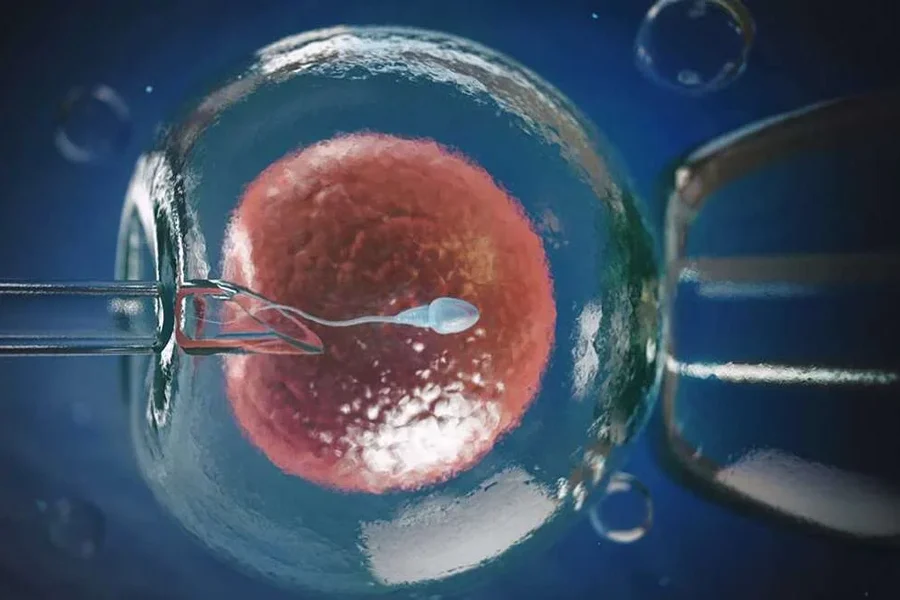
Even the most advanced algorithm is only software if it is not answering the right sperm-selection question.
At Ventus IVF, we choose technology according to the question it needs to answer in your treatment, rather than simply because a device is new. The laboratory needs of a patient with a normal semen analysis are not the same as those of a patient with severe male-factor infertility.
We interpret AI output together with female age, oocyte quality, previous fertilisation rate, sperm-preparation findings and embryo development. We do not present an application merely as “advanced technology” when we do not expect it to provide meaningful benefit.
Ask about your own situationCommon questions about AI-assisted sperm selection
The answers below are for general information. Individual use is determined according to semen analysis, previous treatment records and laboratory assessment.
Ask about your own situationDoes artificial intelligence select the sperm by itself?
No. The system can analyse image or movement data and generate a suggestion or score; the embryologist makes the final selection for injection.
Does this procedure damage sperm?
Image-based analysis generally does not require an additional biological intervention. However, the sperm-preparation and imaging protocol used should be validated by the laboratory.
Does a high AI score guarantee a healthy baby?
No. The score is a probability-based laboratory output; it does not guarantee genetic health, implantation or live birth.
Does it show sperm DNA fragmentation?
Not directly. Some image patterns may be associated with DNA integrity, but a separate test is used when a direct assessment is clinically indicated.
Is it necessary when the semen analysis is normal?
Not always. Routine use should not be recommended when there is no clear clinical question or expected additional benefit.
Can it be used in azoospermia?
For the small number of sperm obtained surgically, technical feasibility depends on the system and sperm motility; individual assessment is required.
Is it the same as microfluidic sperm selection?
No. Microfluidic selection is a physical separation method, whereas AI is a decision-support approach that analyses image and movement data. They may be used sequentially in selected cases.
Does it replace PICSI or IMSI?
No. These are not equivalent techniques. Each method focuses on different biological or visual characteristics, and clinical relevance should be assessed case by case.
Are low-scoring sperm always excluded?
No. The score alone is not an exclusion criterion. It is interpreted by the embryologist together with sperm availability, viability and oocyte conditions.
Is the result available during the procedure?
With real-time systems, analysis may be produced within the ICSI workflow. Timing and use vary by platform.
How much does it increase the success rate?
There is currently no single reliable percentage increase that applies to every patient group. Clinical benefit varies according to the system and patient characteristics.
How is suitability determined?
Semen analysis, previous fertilisation and embryo development, oocyte number and the validated intended use of the platform are considered together.
Explore related technologies
Sperm selection is not independent of oocyte assessment and embryo development. The technologies below support other stages of the same process.
Scientific references and further reading
- ASRM Practice Committee. Artificial intelligence in the in vitro fertilization laboratory: a committee opinion. 2026.Source ↗
- Carrión-Sisternas L, et al. Automated AI for real-time sperm selection in ICSI. Reprod Biol Endocrinol. 2025. PMID: 41299699.Source ↗
- Li Y, et al. Sperm selection for assisted reproductive technology: do we have a winner? 2025. PMID: 41060532.Source ↗
- ASRM. Intracytoplasmic sperm injection for nonmale factor indications: committee opinion. 2026.Source ↗
Let us determine together whether AI-assisted sperm assessment is meaningful for your treatment.
Share your semen analysis, previous fertilisation results and current treatment plan. Our team can explain clearly which sperm-selection approach may answer which question in your case.