
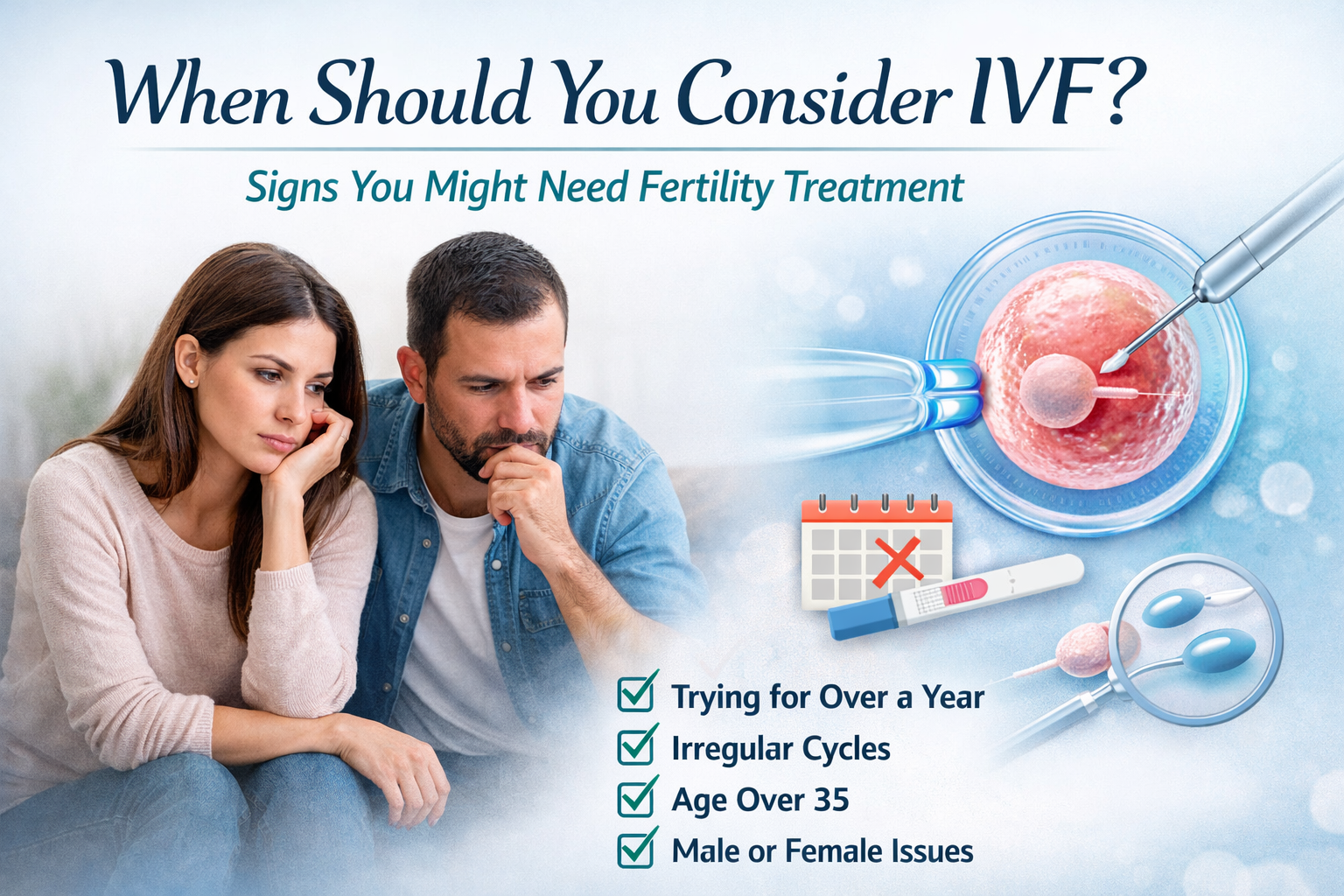
Trying to conceive can be an emotional journey, especially when pregnancy does not happen naturally. Many couples delay seeking help, but early diagnosis can improve your chances of success. If you are wondering when you should consider IVF, the right time depends on your age, health condition, and how long you have been trying.
IVF (In Vitro Fertilization) is an advanced fertility treatment where eggs are fertilized with sperm in a laboratory, and the healthiest embryo is then transferred into the uterus. IVF is often recommended when other fertility treatments do not work or when there is a clear medical reason that natural pregnancy is difficult.
Signs You Might Need Fertility Treatment or IVF
You may need IVF or fertility support if you experience any of the following:
- You have been trying for 12 months without pregnancy (if you are under 35)
- You have been trying for 6 months without pregnancy (if you are over 35)
- Irregular or missed periods, which may indicate ovulation problems
- PCOS (Polycystic Ovary Syndrome) affecting regular ovulation
- Endometriosis, which can impact the uterus and reproductive organs
- Blocked or damaged fallopian tubes, making natural fertilization difficult
- Male infertility issues, such as low sperm count or poor sperm movement
- Repeated miscarriages, which may suggest genetic or hormonal issues
- Low AMH levels, meaning low ovarian reserve and fewer healthy eggs
- Unexplained infertility, where tests are normal but pregnancy still doesn’t happen
When to Visit a Fertility Specialist
If you notice any of the above signs, it is important to consult a fertility specialist. Doctors may recommend fertility tests such as hormone testing, ultrasound, AMH test, HSG test, and semen analysis to identify the cause.
Conclusion
If you have been trying to conceive for a long time without success, IVF may be the right solution. The best time to consider IVF is when age, medical conditions, or fertility test results show that natural pregnancy may be difficult. Early consultation with a fertility specialist can help you choose the best treatment plan and increase your chances of having a healthy pregnancy.